Showing posts with label Shostakovich. Show all posts

Thursday, 1 February 2018

I knew our music would allure him…

Sometime during last weekend, I came downstairs to find The Good Lady Bard transfixed by a recording of Gershwin’s Rhapsody in Blue on Classic FM – a piece much discussed (and played) in this household (as on this blog): especially the difference (on the soloist’s part, at least) between good and bad performances.

This was neither. In a nutshell, it was astonishing – the composure and control of the pianist far excelling any previous experience of this work (and with orchestral accompanists of the same impressive calibre). As TGLB said: even amongst all the virtuoso passages, and the swagger, the performer “sounds like they have all the time in the world”; adding that “they seem so relaxed: as if this is well within their capabilities; that they’re not being stretched, at all…” – and I had to agree. All those dense notes; and what could have been a struggle (or a muddle) rendered crisp, and yet remarkably heartfelt. Whoever was playing was at the top of their superlative game… – but this was not a version either of us had encountered before. I laughingly remarked that, in the more lyrical sections, it reminded me of either Martin Roscoe or Peter Donohoe playing Mozart; however, I was not aware – having listened to many (extremely different) recordings, whilst carrying out research (for the two concerts linked to, above) – of either of them having recorded this.

Wednesday, 13 April 2016

And let us once again assail your ears…


Mozart’s way of reaching his listeners is to make use of faultless technical equipment. His is so smooth and natural a technique as to be very easily overlooked. In fact we are not intended to be made aware of it or to admire it for its own sake: it is merely the means to an end, and in the case of one so supremely gifted a perfectly convenient and untroublesome means, even where it involves appalling difficulties. No parade is ever made of skill or learning.

For the last two weeks I have suffered from (well, delighted in) a weirdly-fabricated earworm, concocted of joyful A major passages of Mozart randomly concatenated together. Thankfully (well, a little…), this has now faded – to be replaced by a more ordered (although more heavy-hearted) rendition of his music in G minor (with occasional interjections of G major and E‑flat major) – proof, if indeed such were needed, that, even as a seventeen-year-old, the young composer was producing some of the most memorable and perfectly-crafted melodies ever written. (That I find these repeated tunes palliative, rather than intrusive and irksome, is also a tribute to his genius.)

Unfortunately, in the process of sliding down the scale, I have also lost the sparkling, delicate phrasing of Peter Donohoe, and his “fluidity; apparent spontaneity; and yet great thought…”. There is impeccable compensation to be had, though, in the Orchestra of the Swan’s command of this music; their inhabitation of each note, each dynamic, each beautifully-rendered arc… – helped, of course, by David Curtis’ gentle authority, discernment, and innate sagacity (not to mention a revelatory solo performance of astounding radiance and intensity).


Anyone who has seen Amadeus will instantly recognize the syncopated opening Allegro con brio of Mozart’s Symphony No.25 (which, as well as this concert, also launched the film). In its contrast of subjects it is the very embodiment of ‘Sturm und Drang’; and to say it is unsettling – especially with its eerie interpolations (particularly after the repeat of the opening, but before the return of the first subject) – would be to mightily underplay its effect. (That it brought to mind the kingly ghost of Hamlet’s father – see below – I hope gives a flavour of the underlying menace.) As always, Mozart’s orchestration is a wonder (as are Curtis’ repeats – sometimes gaining in confidence; others, retreating with timidity…). For instance, there is a condensed conversation between the first and second violins at one point – before they unite in what, last night, felt like cries of Lear-like desperation – which, even in its briefness, seemed to encapsulate the very essence of the composer’s agitation. And, yet again, the oboes and horns were sensational in communicating this tension and angst.

The succeeding Andante, with its muted violins, offers no relief; and just piles on what I can only describe as ‘strangeness’. Now you realize why the two bassoonists – the plangent Philip Brookes and Maria Mealey – were perched at the back of the stage! They have been held in reserve to superimpose another layer of plaintiveness (in the way only this blessed and beautiful instrument can): with such mournful fortepiano sighs that you wonder how one so young could possibly have experienced such all-encompassing grief… – and then so ably communicated it. Without wallowing in such melancholy, Curtis took his time – and there was a crystalline pause, just before the second subject materialized, in which time stopped. (The man may bleed Shostakovich, but he breathes Mozart….) A smattering of triplets in the second violins added to this unease; and there was an extremely abridged, almost Tchaikovskian climax (again, see below), before the sadness resumed.

Ah, you say, looking at the programme: but there’s a Menuetto to follow – a little bit of light relief, there, surely? No. In this deeply-moving performance, the tension just kept on building: with ever more divergences of dynamic and texture. The central, keenly-orchestrated, wind-only Trio thus became funeral music of the most affecting kind (with a profundity I more associate with, say, Beethoven’s Drei Equali…). And even that section’s concluding ‘chortles’ (with stunning dynamic contrasts – of course!) sounded more like the cackles of a madman (or even the sarcastic demons in Elgar’s The Dream of Gerontius) than anything exultant.

The bassoons then (sadly) fade away for the final Allegro. This, to me, felt like a gathering storm. But it never really breaks. The syncopation of the first movement returns in the strings; and the turmoil, the tension, the unrest, never resolves. This is beauty – especially in the string writing and playing – of the most disquieting, challenging kind… – and yet the vibrant, limpid tenor of the orchestra soothed my soul.


However, the Mozart was a walk in the park on a warm summer’s day, compared to what followed (including “A funeral parade for a five-star general around Red Square,” according to Curtis)! If I had previously imagined the spectre of Old Hamlet, now he would solidify, pale and wan, before my eyes. (“’Tis bitter cold, And I am sick at heart.”)

What art thou that usurp’st this time of night,
Together with that fair and warlike form
In which the majesty of buried Denmark
Did sometimes march? By heaven I charge thee speak!

I have a sneaky feeling that Curtis is furtively attempting to perform an extended cycle of the complete works of Shostakovich – not in any particular order; and not within any specified time-limit… – especially as last night’s second spook emerged during the great composer’s awesome Hamlet suite, op.32a. Unlike his later, intensely serious, film‑score, op.116, this is a haunting more akin to Tim Burton’s Beetlejuice…

Shostakovich, like many Russians, had an obsession with the character of Hamlet. In 1932, early in his career, he wrote incidental music for a notorious stage production which treated the play as a farcical comedy. Then, just over 30 years later, he was persuaded to write the music for a film of Hamlet directed by Grigori Kozintsev, again with satirical overtones. In effect, it made a covert attack on the Soviet system.


If it wasn’t for next week’s Immortal Shakespeare concert at Holy Trinity – featuring the first performance of the most beautiful cantata of the same name by Dobrinka Tabakova, the Orchestra of the Swan’s Resident Composer – I would have described this work’s performance as the apogee of the orchestra’s Shakespeare 400 season (commemorating the poor man’s death): such is its startling boldness and power.

It is a dilly: with its parodies of light music, its parodies of serious music, its parodies of even the Dies Irae chant, Shostakovich’s score sounds like nothing so much as Offenbach done up to date in Soviet Russia. By the time he composed the incidental music for Akimov’s Hamlet in 1932, Shostakovich was an old hand at turning out ironic farces: from his satirical opera The Nose (1928) through his music for the burlesque ballet The Age of Gold and his travesty of a music hall revue Conditionally Killed, Shostakovich knew just how to balance irony and sarcasm with popular music so as to make the most appealing possible mixture. That this mixture did not appeal to the Communist Party says more about its lack of humor then it does about Shostakovich’s music.

In the hands of Curtis, this was gripping, electrifying stuff: with incredibly dramatic playing from all quarters of the orchestra. No-one escapes the intense work-out this music requires – and all delivered impeccable dynamics, humour, poignancy, and precision. (I am struggling not to list every single member of the orchestra by name, here: but there were so many excellent solos, duets – and a cheekily-repeated, yet merited, lyrical string quartet section – that I do not want to leave anyone out.)

There were also shocks aplenty – particularly from the brass and multi-tasking percussionists – as well as snippets that simply ended.


There’s probably no need to concentrate, or elucidate, too much on the structure of Tchaikovsky’s rightly-famous Violin Concerto, which completed the concert – after a well-earned interval – except to say that is hard to believe…

…that in Tchaikovsky’s day the famous violinist Leopold Auer, for whom the work was written, pronounced certain passages unplayable, and even Adolph Brodksy, who gave the first performance with the Vienna Philharmonic, declared that the solo part taxed his technical skill to the utmost.

…especially watching Tamsin Waley-Cohen’s magnificent and insightful portrayal. As the publicity for the concert stated, “this [fiery] work is the perfect vehicle to display Tamsin’s extraordinary technical skill”; and this was a joyous demonstration of that rare combination of dexterity and sensibility.


If I had to sum up the performance in two words – one for the soloist, one for the orchestra – they would be ‘ferocity’ and ‘balance’. However, regular readers of my reviews will know that I never let myself be troubled by such ponderous limits – so let me explain.

Waley-Cohen brings both ferocious intelligence and emotion to the stage. The first movement, in particular, was one of great contrast: with both incredible power and gauze-like delicacy on display. In the Andante, she then demonstrated a lyrical sensibility second to none. Her communication with – and obvious admiration of – the orchestra came into its own, though, in the final Allegro vivacissimo. Her rapport with Curtis was also quite staggering.

Her maturity is never in doubt – hence my choice of that second word. She is never afraid to play quietly: knowing that the orchestra’s large numbers are no indication of its transcendent accompanying subtlety. She is also willing to become an integral part of their limpid texture – an equal member – when necessary; and the joy she displayed – inbetween all that praiseworthy fireworks and tracery – when observing them at work, I believe demonstrates both generosity and a keen appreciation of their skills.

Thus a work I had never really admired before now spoke volumes: its flow insinuating itself deep within me. This was a great, very special, utterly exceptional performance. And the rapturous reception said so much more than any of my words ever can.

Even then, though, the evening was not over: a short, soulful, introverted encore helped us – eventually – start drifting back to earth from the heavens we had inhabited. We could begin to breathe once more….


Yet again – as always with Curtis and the Orchestra of the Swan – this was a shrewdly-programmed concert: one with tragedy at its core. But, somehow, its overall effect was gloriously uplifting: probably because music of this quality is keenly felt and rare. We are therefore so lucky to have such inestimable talent within such easy reach.

Thursday, 31 March 2016

As thoughts and dreams and sighs, Wishes and tears…


Admittedly, my taste in music is broad (and, I would like to think, deep) – but, even so, occasionally (and only occasionally), I chance upon a concert so perfectly-programmed that I wonder if my thoughts have somehow leaked out into the stratosphere to be captured by some propitious musical genie (with snazzy multi-coloured socks, perhaps…). And then I remember that not only are the works themselves immaculate, and impeccably-aligned, but the performers are also from my happiest, most aspirational dreams. (It’s as if someone’s gifted me my own personal orchestra!)

So it was that I entered Malvern’s Forum Theatre, yesterday evening – and still in daylight… – with the most gormless grin plastered on my face. No, not Brahms, Elgar, or even Vaughan Williams; but, yes, congratulations to those of you who yelled out “Shostakovich”! In this case, his First Piano Concerto – and wait, it gets better… – performed by Peter Donohoe (above)! And bookended by my favourite Mozart symphony (No.29, K201) and piano concerto (No.12, K414) – both in the “golden, warm, and sunny” key of A major… 

This key includes declarations of innocent love, satisfaction with one’s state of affairs; hope of seeing one’s beloved again when parting; youthful cheerfulness and trust in God.

…and I think all these properties could be said to be present – not only in the golden, warm, and sunny Orchestra of the Swan – but especially in the symphony, which opened the evening. (The concerto, I feel, is more meditative – an aspect that was beautifully illuminated by Donohoe: who appears to have such a gracious affinity with Mozart that the music always sounds fresh, yet considered, in his hands… – but more of that later!) Additionally, to my ears, in both works it sounds as if the young Wolfgang has found his wings – and is making sure that everyone knows he can fly!


Eric Blom, in Ralph Hill’s The Symphony, describes Symphony No.29 as “this slender but extremely appealing work of 1774” – but adds that it “takes the foremost place in one’s affections [because] the youthful musician took fire from his inspiration and wrote for his own satisfaction”.

It may be an early work for Mozart (he was eighteen): but its ingenious string writing, with its gossamer strokes, foreshadows the serenades of the late nineteenth century. Such accomplished orchestration is often superimposed – throughout the work – with characteristic (on some occasions, extremely) sustained notes in the oboes and horns (demonstrating the Orchestra of the Swan’s wind section’s magnificent collective lung capacity). But it is that glorious leaping, ascending first subject of the Allegro moderato that grabs your attention – sung so radiantly by OOTS’ skilful strings… – as well as the sudden, electrifying changes of dynamic and mood (especially in the first repeat) which follow. And, for once, the floating oboes (Victoria Brawn – page-turner par excellence… – and Louise Braithwaite) and insistent horns were perfectly balanced and transparent. (It can be so easy to overwhelm them with too many strings… – but never here.) Bliss!

Blom says of the following Andante that “Its peaceful atmosphere is that of a sunlit garden and its finely balanced shape suggests that the garden is one with trimmed hedges and symmetrical vistas.” The muted strings, here – with the, at first, timorous descant-like counter-melody in the first violins; and the building layers of oboe and horn – wandered through the greenery with plangent, sometimes whispered, delicacy; the second subject just as beautiful and affecting as the main theme of the Tchaikovsky that followed after the interval. Not one blade of grass was flexed or folded. David Curtis, conducting, needless to say – with occasional balletic sweeping gestures, subtle body language, and a marvellous range of encouraging facial expressions… – let the music breathe: with profound moments of gentle rubato. We bathed in the orchestra’s warmth; and all was well… – well, until the wind’s salute in the spine-tingling Coda. Not a rude awakening as such: but a fanfare to signal the following Minuetto was on its way.

Blom describes this as…

An extraordinarily vigorous and original movement. The octave unisons for the oboes and horns… at the end of each of the two parts of the main section are a daring innovation, and the immediate mocking imitation of it by the strings at the opening of the second part is irresistibly humorous.

Look out, Shostakovich, you have competition!

As the pleasing programme note – by Christopher Morley – implies, this is hardly music to dance to, with its “less than courtly energy of Beethoven scherzos”; and yet there are hints of a Tchaikovskian waltz in the Trio. More originality – this time tinged with fun (and the smiles of a happy band)!

The final Allegro con spirito is well-known for its status as a “conductor’s nightmare, with its [oft-repeated] rushing upward unison scale beginning off the beat… this sky-rocket…”. However, Curtis had apparently not even glanced inside the programme’s pages: the violins were always perfectly, brightly, joyously synchronized! What stood out for me, instead, was the superb horn playing from Francesca Moore-Bridger and Craig Macdonald.

With its octave jump, the rising initial theme, here, takes us back to the first movement – one of the many signs of Mozart’s burgeoning maturity – which, as Blom states, “is used imitatively with great skill in the working out”. He then adds an aside to his description of “the very pretty second subject” that follows – which, I believe, sums up the whole symphony (if not the complete works…):

The word ‘pretty’, by the way, though it happens to be the right one here, should not be taken to confirm the far too widespread view that Mozart is the ‘dainty’ composer, not only of the popular fancy, but even of the imagination of many musicians, especially of the nineteenth century, who ought to have known better and seen deeper. He could achieve prettiness incomparably well simply because he could express anything whatever that came within the range of the technical resources and the aesthetic conceptions of his time.

…and I simply could not have put it better (although Donohoe certainly did, in the too-short pre-concert talk…). Read a Mozart score (including this one), and his genius leaps from the page – the effects he achieves with “only the normal small Salzburg orchestra of two oboes, two horns, and strings” are remarkable. His music may sound ‘pretty’ – but underneath the tranquil waters of the Avon, that swan is pedalling with all its might: a picture of effortless, exuberant perfection. And in its undoubted element.


Both the Shostakovich and Mozart concertos (the latter ending the concert) are known for including quotations from other composers (and, of course, in Shostakovich’s case, himself…). I think they also share a dark inner voice – already hinted at in the symphony’s inner movements. Whereas, there, it was the strings who butted in; here, in Shostakovich’s First Piano Concerto, it is nearly always the trumpet – given emphatic, argumentative articulation by Hugh Davies (stupendously producing some of the greatest, almost jazz-club-like playing: akin, for me, to the legend that is Miles Davis…) – which supplies the interjections.

Years after he wrote the work, Shostakovich recalled that he had initially planned to write a concerto for trumpet and orchestra and then added the piano to make it a double concerto. As he continued writing, it became a piano concerto with a solo trumpet.

That sums the work up quite pithily – but does not go far enough in hinting at the mayhem that Shostakovich’s mastery somehow knits into a cohesive whole (and a jolly entertaining one, at that – if your idea of entertainment is as masochistic as mine… – although it must be fiendishly hard work for both soloist(s) and orchestra). For one thing: I am not convinced that the trumpeter has the same perspective as the pianist. Anyway…

The first movement, Allegro moderato, immediately wakes you from your Mozartian reveries: pulling you away swiftly and cruelly from those sunlit uplands; with Donohoe issuing a startling challenge of runs and a creepy, creeping, resonant bass motif (above). This develops into what I can only describe as ‘typical Shostakovich’ – a pointed Allegro vivace, with infrequent trumpet commentary. Although the strings, with Curtis’ precision guidance, try their hardest to calm things down, as the pace slows (marginally) to Allegretto – and just as it looks as if everyone is going to play nicely together, at the transformation to Allegro – Donohoe careers off expertly with yet more of that trademark, jagged sarcasm.

The strings will not be defeated: and try again, with an episode of deep introversion, low, low down. But that skulking bass figure, and its accompanying open theme, return; and…

…well, we’re suddenly thrown into the deep end of a transcendent, piercing beauty that, again, could only be by Shostakovich: almost a slow-motion mazurka – here, revealing Curtis’ increasingly deep immersion in such movements: expressed ethereally in the upper strings. Eventually, Donohoe joins in – reticently, almost, as if scared to intrude… – but the crystalline melody he conjures up just adds to the tension: especially when underwritten by a hint of “that skulking bass figure”, again, momentarily; before a simple tune and accompaniment. You know it can’t last for long…

…but, somehow, it does; and further evolves into supreme, Rachmaninoff-style gorgeousness. Of course, this is when the façade comes tumbling down! The man just can’t resist! And off we go again, Più mosso, with an intense, short burst of a cadenza, underlined with some heavy martial bass chords from Donohoe. The strings reciprocate… – and we are drawn back into the haunting world of the Fifth Symphony: “the brass-less Largo, which ‘is the work’s emotional core’ – ‘one of the most despairing pieces of music ever written, a memorial for Mother Russia and all those sent to the labour camps’.” Even the solo trumpet now sings muted and mournfully – sensational, plangent playing from Davies: well-deserving of Donohoe’s approbation and gratitude at the end… – before holding hands with the piano for a moment; which then leads us on, as the strings return for a heartbreaking descent into hell, whilst Donohoe soars almost imperceptibly heavenwards.


The Moderato third movement is really just a short skip and a step from being the introduction to the final Allegro con brio. As if to acknowledge where he left us – sobbing into our handkerchiefs – Shostakovich breaks us in gently with some twinkling work for Donohoe (and that remarkable, ineffable, deftness of touch). But the strings seem to want to pull the music back to that soul-shaking slow movement. And yet, you just know that the proprietary spikiness will return, eventually…

… and so Davies interjects yet again: with Donohoe trying to overwhelm any other instrument in hearing with massive torrents that build to what I can only describe as an almighty bunfight between the two soloists.

I’m not sure you could say that order is then restored, as such. It never is. It’s not a compromise, either; nor a handshake – more a licking of wounds – and yet, the piano reneges on whatever Machiavellian bargain was made, and again asserts its supremacy.

But Davies’ gleaming trumpet has a trick hidden up its valves – and all Donohoe can do is punctuate its swagger with one annoyed fortississimo chord: slamming the door and storming out. So cocky, now, is the trumpet, that it even sings a repeated burst of “I’m H‑A‑P‑P‑Y” (seriously); and the strings join in with the fun, before – of course! – Donohoe tries to barge back in. Unperturbed by this rudeness, everyone else just keeps going, before the trumpet finally gives in, widely opens the door, and in flies Donohoe, tails trailing, with the most manic, gathering, swinging storm of a cadenza. Gosh, that man can play! (Which may well be the understatement of the century.)

The trumpet’s return is impudence personified. Both soloists want to have the last word. And they do. And we cheer and stamp, and applaud: knowing that intense magic was worked – but not quite knowing how. (I’m beginning to think Curtis must have some Soviet blood in him.) Stupendous, on all counts! (And not a surprise – considering the immensely-skilled, interrogative punishment it received – that the piano needed a quick retune, afterwards.)

[Reading this back, I find that I am struggling to do both the work and the performance justice. Just take it from me that it was formidably astounding… – or, perhaps, astonishingly overwhelming… – and then mix those thoughts in with the rest of my underachieving prose….]


I don’t know about anyone-else: but I also required a retune after that. And maybe, then, to follow, a nice gentle massage…?


Call me a mushy romantic – “Tysoe: you’re a mushy romantic!” – and I shall be happy to agree. The Tchaikovsky Andante Cantabile that followed (an arrangement of the slow movement of his first string quartet – usually for cello and strings – and music now recommended for funerals, would you believe…?!) is just an outpouring of the purest beauty – and therefore ‘gets’ me every time. It speaks – nay, it sings – to me….

Some may consider it ‘sentimental’ – but, to me, it feels like a distillation of regret; albeit with a teensy smidgen of hope. It was the perfect antidote to the Shostakovich; and definitely massaged my soul.

All I need say is that Curtis and the OOTS strings played this simpler, warmer adaptation (not quite the one above…) – paced perfectly, with some agonizingly pure poignancy – as if their lives depended on it. (The solo from David Le Page, as always, was considered and touching: utterly representative of the rest of the orchestra.) This was controlled catharsis of the most ravishing kind. I felt truly cleansed….


The closing Mozart concerto never quite lets go of this more maudlin feeling – despite being in that “golden, warm, and sunny” key of A major… – not even, I feel, “in the genial rondo finale marked Allegretto”.

There is some wonderful orchestral writing before the piano is finally invited to join in. Donohoe seemed to be enjoying the rest, though: observing Curtis and the orchestra with a keen eye and matching smile – perhaps, wondering, like me, with only oboes and horns added to the core strings, how they were making such rich music! But his entry (above) was fabulous: as if he had just heard these wondrous themes for the first time; absorbed them; and was extemporizing on them. No-one plays Mozart like Donohoe: there is such fluidity; apparent spontaneity; and yet great thought (you know that every single note has been scrutinised and weighed-up with his well-developed wisdom and expertise). He honours the music with so much grace; so much meaning; that it is as if he has clothed himself deep within it.

He wears it lightly, though; and never grandstands. He is a truly collaborative performer (despite his justified quarrelsomeness in the Shostakovich) – especially with Curtis “at the front, waving his arms around” – and he and the orchestra’s members are genuine equals. Thus, even the first-movement cadenza was simply a demonstration of his wonderment at Mozart’s brilliance. No fireworks, as such – just clear illumination of genius.

His playing in the Andante – entering with one of Mozart’s most beautiful piano themes – was thoughtfully subdued. It flowed slowly, affectingly, out of his fingers… – although I thought I detected just a hint of menacing Shostakovich in the short cadenza… – all the way to that transcendent ending. (Do not doubt that this is Romanticism of the highest order – up there with both Tchaikovsky and Rachmaninoff.)

Even the final movement’s cadenza was ruminative – allowing Curtis to pause the orchestra, take deep breaths… before a final flourish from Donohoe; and a compact climb to the pinnacle of… – actually, I really don’t have the words for such… beauty. (Just let’s say that I could probably listen to Donohoe play Chopsticks on an endless loop – preferably accompanied with his and Curtis’s commentary – and still find it compelling.)

And then, just when I thought this was an evening that could not be improved upon, the gentle, generous soul that is Donohoe – who had thanked everyone on the stage several times, as is his wont, with modest graciousness… – spoke a few quiet words to the audience; entranced us, transported us, with an encore (Shostakovich – of course… – his Prelude and Fugue No.7 in A major (the great man tells me…)) that seemed to encapsulate all that had gone before….


And so it was that I departed Malvern’s Forum Theatre, yesterday evening – in darkness… – with the most gormless grin (still) plastered on my face; but with tears yet drying on my cheeks. My heart was full… – thanks to some of the most wonderful music and musicians. What else could one desire…?


Postscript
Well, if, after all that – and my failure to praise it duly… – you’re looking for even more of OOTS’ patented, emotive yumminess: then, on Friday, go grab a copy of the CD, below…! (And, be warned: Donohoe and the orchestra also have a recording of Shostakovich’s Second Piano Concerto out, hopefully later in the year; matched with yesterday’s recording of the First…! Watch this space!)

On Naxos’s new album of the English composer’s work, the Stratford-upon-Avon-based Orchestra of the Swan, under their music director David Curtis, perform arrangements of some of Ireland’s finest inspirations.
     The Downland Suite, arranged from its brass-band original by the composer himself, is in the best English pastoral tradition.
     The passionate Cello Sonata, written in the Twenties, when Ireland was in the throes of an affair with a much younger man, has been transcribed for cello and strings by [OOTS cellist] Matthew Forbes, and is brilliantly dispatched by cellist Raphael Wallfisch.
     If you didn’t know, you could think it was originally composed as a cello concerto.
     A really good introduction to Ireland’s art.
– David Mellor: Daily Mail (26 March 2016)

More information here and here.

Sunday, 31 January 2016

The long (and winding) read:
May the First be with you…


For my eighteenth birthday, a wise, good school-friend – one of two talented violinists I used to accompany on the piano (she is now a lecturer and researcher in inorganic chemistry at Pembroke College, Oxford) – presented me with a stack of 32‑stave ruled manuscript paper. Probably because of its size, it looked even more daunting to me than the normal demands of a now-you-must-fill-me-with-words blank sheet of A4. “This is for your first symphony,” she said, sincerely. Which, even as a show of confidence – never mind some sort of challenge – provoked a scary surge of adrenaline.

I still have it: cherished (as is the friendship) during all the intervening years (and house-moves); as well as the beautiful mechanical pencil a mutual acquaintance gave me on the same occasion. Even though, in some ways, both thoughtful gifts have been superseded by technology – until my hearing went, any scribbled jottings of note (ahem) at the piano were always rapidly transformed into more legible pixels – I still hope, one day (now that I have returned to music; and music has returned to me), to fulfil their joint wish.

To be honest, I hadn’t known – even with having spent too much time perusing, and purchasing, scores in Blackwell’s old music shop in Oxford – that such an impressive striped beast existed. My only real exemplar had been derived from viewing the five-nibbed pen displayed at the Elgar Birthplace Museum and Visitor Centre: which the composer’s supportive wife, Alice, used, laboriously, to produce reams of those parallel demoralising skeletal lines, early in his career. And I had naïvely assumed that this was what all garret-dwelling geniuses did.

Now, of course, the likes of software Sibelius seem to rule (sorry) supreme. Or you can simply download a PDF of however many staves you require, to print at home – which, at one point, was my preferred method for smaller works (although I had originally constructed my own versions using desktop-publishing software). However you render your music, though, there is a massive amount of graft involved in covering those sheets with so very many notes: “The toil… the enormity of the task of writing out a full score”. You have to be immensely motivated to get to the end of that “challenge” – even once. No wonder “It caused Haydn so often to add at the foot of the last page of many of his symphonies, the words: ‘Laus Deo’ (God be thanked) that the labour was finished!”


While, in some ways, an early-starter when it comes to composing – although certainly no child prodigy – I always wrote (probably quite derivatively) for the distinct (and sometimes quaint) forces I had at my disposal: piano music for myself and friends; small chamber pieces (especially for violin and piano – although my favourite was a ‘jazz suite’ for three sisters who played clarinet, cello and trombone); the odd song-cycle; and choral works – both sacred and secular – by the bucketful. But, when it comes to larger, more symphonic works, I am definitely a (yet-to-begin) latecomer – even with the help of Walter Piston’s unbeatable, biblical Orchestration: which my parents bought me at the same time. (There may have been a conspiracy.)


These memories were provoked, a few weeks ago, by the arrival of the first orchestral score to drop on my doormat in a very long time – Shostakovich’s Third Symphony – for study ahead of last night’s (again) dazzling performance by the ever-sublime and -sensational Cheltenham Symphony Orchestra, conducted by the deeply thoughtful and passionate David Curtis. (I know, after their barnstorming – or, more accurately, Town Hall-storming – rendition of the Fifth, I should not really have been so taken aback: but they are so cohesive, subtle, technically and emotionally gifted, that it is impossible to think of them in any way as “not a full-time professional ensemble”.)


First performed in Leningrad, on 21 January 1930 – “the sixth anniversary of Lenin’s death” – this “new kind of symphony” (in reality, a somewhat Straussian “tone poem” – an apposite characterization from Curtis – with, I think, echoes of Berlioz…) is a work I can only remember hearing live, once – and that vaguely, many, many years ago – and therefore, not, until this month, a piece I knew at all well. Generally – even with (or maybe because of) its somewhat grandiose title of ‘The First of May’ (‘Pervomayskaya’) – it seems much less loved (and therefore performed) than many of Shostakovich’s other works: even though it is relatively short; and, I consider, extremely approachable (as well as heart-piercingly momentous).

Despite its continual, often unrelated, episodic exposition and experimentation, somehow Curtis once again (and I do not think I have ever seen him so utterly involved; so completely engrossed; so mobile…) moulded the music into a compelling, soul-nourishing, narrative arc… – thankfully, after a joyous, nimble, accessible and intelligent run-through of several of the symphony’s high points and key changes of mood (which gave everyone present the chance to prepare themselves for the coming onslaught…).

Sat in awe, therefore, in the inspiring, regency Pittville Pump Room, I particularly noticed the repeated motif of ascending and descending basslines (you could feel them rising and falling through the soles of your feet); as well as some deft, ornamental instrumental writing – quite tricky stuff, especially in the woodwind (including some literally brilliant piccolo playing from Amanda Kaye): although handled confidently and brightly by the CSO – this often wrapped around a trenchant tune: which, on paper, appears to be buried in the middle of the orchestra. In these passages – especially – the acoustic balance was jewellery of transcendent clarity and sparkle. (I will try – and fail… – not to go into too much analysis of the piece, here: partly because there is a superb, detailed account – including its place in Soviet history – written by Howard Posner, on the Los Angeles Philharmonic website (and which, coincidentally – probably because this work is a rare creature indeed – also appeared in the programme notes).)


On the very first May Day
a torch was thrown into the past
a spark, growing into a fire,
and a flame enveloped the forest.
With the drooping fir tree’s ears
the forest listened to the voices and noises
of the new May Day parade.

What I had forgotten – curiously – was (in the original score) the stirring (but maybe not wholeheartedly sincere – who can tell, with the deceptive Dmitri?) chorus at the end (hints, as Curtis surmised, of Beethoven’s Ninth?) – here ‘emphasized’ by the brass section: reminding me even more, therefore, of the thrilling final movement of that last concert. As Mark Wigglesworth writes (in notes – also well-worth perusing – to accompany “strong, idiomatic readings” with the Netherlands Radio Philharmonic Orchestra): “Only those with the shortest of musical memories can listen to the rousing choral finale with a sense of triumph and joy.” Posner also discusses this strange ending, in a similar vein:

If the first 20 minutes are loosely constructed and episodic, the choral conclusion is direct, forceful, and declamatory, an apt and powerful setting of Kirsanov’s words about inexorable progress [using the annual May Day parade as a metaphor for the march of socialism and justice] into the future. The orchestra’s final bars may seem tacked on and unnecessary [however] Shostakovich may have felt that the public and festive nature of the Symphonies made old-fashioned bright, major-key endings necessary, but it is difficult to make such an ending convincing when the musical language of the work has been something altogether different. In Shostakovich’s music, the old and new would always be cheek by jowl, sometimes at odds, and occasionally at war.

To be honest, I was a little sad to ‘lose’ that chorus – although it is doubled by the orchestra, almost throughout, in the original. But, for less than five minutes of quite awful Soviet celebratory propagandist drivel (see excerpt, above – Curtis was a little more polite…) – very similar to that produced, today, by North Korea – I really do understand the logistic (and aesthetic) motivation behind the decision. It certainly didn’t lessen the impact (in fact, it may well have heightened it)!

The brass, here, again, were characteristically strong, precise, and forthright (reminding me of Walton’s Belshazzar’s Feast at one point) – although, in contrast, the Vaughan Williams-like, almost military, hushed, trumpet call near the beginning was gorgeously ushered in by Paul Broekman. Such stunning playing from this section – ranging all the way from super-subtle to superexaltation – is possibly the CSO’s USP. (Although the intensely spirited percussionists – Roger Clift, Ros Fletcher, and Freya Ireland – also take some beating. (Ba-boom.))


Poetry and Hums aren’t things which you get, they’re things which get you. And all you can do is go where they can find you.
– AA Milne: The House at Pooh Corner

I adore reading through scores (especially that first time: knitting together the various instrumental strands): hearing the music in my head (although it took some time to learn to ignore the resultant funny looks that such – it would seem – ‘unusual’ behaviour often garnered on the trains back to university or home: sometimes precipitated, I admit, by the sounds also emerging as not-quite-stifled “Hums”). And yet I still savour the anticipation of turning those pristine sacred sheets. So, after such a long time, the prospect of touching them gently, like fragile holy relics, was utterly thrilling. It took me some time, therefore, to open the cover.

This, I am afraid, is when the wholesale desecration begins: not only bending back each page so it remains flat; but the scribbled exclamations and analyses; the sticky page-markers and bent corners. At one point (rehearsal number or figure 45) – and, last night, a shocking transformation – aided by a crucial, muscular assault from timpanist Paul Berrow – from pianississimo in the strings to the sudden outcry of fortissimo in the brass and cymbals – a sudden slamming-on of brakes – I had written the word “Ouch!” This was yet another moment of supreme, characteristic, orchestral control from Curtis – but credit must also go to the cellists and bassists for their courage in following immediately with a subtle, whispered, entrancing, passacaglia-like passage: guaranteed to leave you breathless (and somewhat dewy-eyed).


There are thus hints not only of the Fifth: for example, in some of the episodes of explicit lyricism (especially the Lento at figure 49, for instance) and implicit goose‑stepping; but foreshadowings of the later ‘Leningrad’ Symphony’s horrifying ‘invasion’ theme, with its terrifying, repeated snare-drum motif, at figure 37. Here, Clift shook the hall to its foundations with an instant hail of shocking, aggressive fortississimo – piercing even through the preceding, still-resonating, climactic orchestral tutti. [I must admit that I did check, shortly afterwards, that the chandeliers had not shattered…. They are obviously made of sterner stuff than I!]

Although the work is additionally haunted by the innovative ghosts of other composers – especially Mahler (as Curtis highlighted), Prokofiev and Stravinsky (the latter two especially present in the symphony’s somewhat neoclassical moments; and with hints of The Rite of Spring at figure 80; closely followed by random-yet-precise bass drum explosions – stunning accuracy and vehemence from Ireland (thus my player of the night) – during a sustained, shocking, full orchestral unison) – what will never leave me is how very young (but certainly not immature – musically or politically) Shostakovich was when he started its composition. Not quite twenty-three – “when he was still a graduate student at the Leningrad Conservatory” – and “covering those sheets with so very many notes” in less than two months! (And such discretion and wisdom!)

Coming of age so very early, it is no wonder that, later in his career, he managed to smash the (supposed) “curse of the ninth symphony”, and go on to write fifteen in total. (“Brahms was already forty-two when his First Symphony was introduced”; and Elgar only produced his first – of only two – at the age of fifty-one. (There is hope for me… yet.))


My feeling is that Shostakovich deliberately sacrificed the relatively conventional form and much of the melodic invention of his First Symphony at the altar of colourful and rhythmic effect, so that he could concentrate on honing his argumentative techniques – and that’s why the Second and Third symphonies are generally regarded as the crucibles in which he forged his mature style. Once he’d cracked that, he would turn his attention – in no uncertain terms – to the question of symphonic architecture.

What truly astonished me, though – and it was apparent, here, that the experience of playing the Fifth Symphony had seeped deep into their veins, and immersed the canny brains of the performers in an exhaustive (and probably exhausting) understanding of the Russian psyche – were the obvious large dollops of full-grown, signature, somewhat argumentative Soviet sound and frequent sardonic subtlety: beautifully highlighted by both conductor and orchestra.

The opening, soul-penetrating clarinet duo, for example – from Janet McKechnie and then Sarah Chestney – was an archetype of the beauty (both savage and subdued, submissive) that was to follow: in some ways deceptive – this is a dawn that sometimes seems to lead to unrest; to confrontation, rather than celebration. And then there are apogees everywhere (I really didn’t want to write “multiple climaxes”) – but the one that was head and shoulders above the rest, last night, for me, was at figure 78. Again, fortississimo; again, tutti; again, that ascending bassline – climbing heavenwards, to the Pump Room’s glorious dome… as the foundations vanished. (Deep breaths.)

Figure 98, though, is where the symphony finally hits the home stretch, and launches into its jubilant, communist stride: with that epic – but, to my ears, twisted – “choral conclusion”. (I believe you may be better off not knowing the words – as we were fortunate to experience here – or the possibly programmatic nature of the work. (As Curtis said, you could easily invent your own!)) In the score, I scribbled “You knew something was coming!” – and yet the anticipation produced by the forces in the Pump Room (which didn’t quite feel big enough, somehow, to contain this mass of victorious(?) sound…) grabbed me more than I could have imagined – Curtis taking one of his trademark (virtual and virtuous) deep-breaths… before launching confidently toward the finishing tape.

I was left gasping and hollow. This is the greatest music; greatly performed. As such, it emptied my soul….


Editor: So you’ve written around two thousand words, and you’re still stuck schmoozing with the Shostakovich?
Bard: Well, of course I am. I may never hear it again… – and it is rather splendid. I’m hoping, of course, that – if people ever make it this far down the page… – others will consider performing it, as a result. (Oh, the power!)
Editor: So, apart from that, Mrs Lincoln, what else was in the show?


This cleverly-programmed, cohesive concert began with the (mostly) rip-roaring Night on a Bare Mountain – or whatever you may wish to call this “musical picture” – in the usual, vivid, technically-stunning Rimsky-Korsakov version – “freely revised and orchestrated… it is scarcely accurate to describe it as by Mussorgsky”. This was as perfect an opener – an Allegro feroce wake-up call – for a series entitled Russia – Revolution and Romance – as you could hope for: immediately demonstrating the wonderful wizardry of every single member of the CSO. (Bloody hell, they are GOOD!)

The witches used to gather on this mountain… gossip, play tricks and await their chief – Satan. On his arrival they, i.e. the witches, formed a circle round the throne on which he sat, in the form of a kid, and sang his praise. When Satan was worked up into a sufficient passion by the witches’ praises, he gave the command for the sabbath, in which he chose for himself the witches who caught his fancy. So this is what I’ve done.
– Mussorgsky, in a letter to Vladimir Nikolsky

It may be fiendishly famous, and frequently performed, but, here, it lost none of its diabolical power to startle – especially with Curtis at the helm: steering devilish dynamics and tempestuous tempi with infernal intelligence; stopping the orchestral orgies, several times, on a sixpence; and highlighting the subtleties and contrasts that can often be lost in its malevolent mayhem. (A particular moment of necromantic note was the build four bars after figure T – in my tatty old score, anyway… – featuring yet another of those deft, magical pauses….)

I had forgotten, though, just how murky and mysterious the coda can sound: where the music suddenly softens and darkens with the introduction of the abominable bell and hellish harp (John Stillman – my son’s former piano teacher! – extremely realistic, on keyboard); crepuscular harmonics in the cellos; and tenebrose muted violins (as well as the indication that the percussion will get a well-deserved and much-needed nap before the Shostakovich: “Tacet al Fine”). It takes courage, I feel, to subdue things as much as last night’s interpretation did (and yet, somehow, retain its eerie radiance), after the rumbustiousness of the rest of the piece. But this worked phenomenally well. The calm before the returning storm….

And there were a couple of (to my ears, extremely Russian-sounding) moments that hinted at the Shostakovich which followed (and which, somehow, made that work seem such a natural progression): the rising bass (albeit in slow motion) before figure G; and the more rapid descent – straight to perdition? – just before figure S. [Eight bars after figure P, by the way – just before the main brutal brass theme returns – is one of my favourite instrumental instructions of all time: for the cymbal part to be played “avec la baguette”. This simply means to “hit with a stick”, rather than the usual clashing together. (It does not indicate that the percussionist should perform whilst eating – or with – one of Subway’s finest… – which is the image that always, naturally, spontaneously, appears in my head. (I know.))]

This work certainly cast its spell on me….


Anyway… after the Shostakovich – and a necessary deep and long chest-filling inhale of shockingly cold, Gloucestershire air (followed by a lively, quick natter… – but no sandwich) – the evening ended – stupendously – with Tchaikovsky’s no-matter-how-many-times-I-hear-it-I-always-fall-more-deeply-in-love-with-it First Piano Concerto. [And yet I still frequently leave the concert hall slightly miffed – as I did, last night – wondering why that magical, hair-raising, inaugural fanfarade – one of the most stupendous, singable melodies ever written… – is never reprised (although the mystical transition from this ‘introduction’ is perfectly, fantastically, transformative…). Well, until you hear it performed next time. (And there’s always a next time!)]

This theme has now served its purpose as a preludial trial of strength, and it therefore fades away, to a piano accompaniment of descending chords of triplets, answered by similar ascending chords in the wood-wind…. Tchaikovsky has been blamed by the highbrow formalists for throwing away his great introductory tune. Brahms, of course, would never have been so wasteful, nor would Beethoven. But there is room in music for prodigality of ideas, especially when they are coordinated with such subtle sense of their dramatic potentialities for development, and when they employ the time-factor – that true criterion of musical form – so successfully.

It is such a well-known work that you may think it hardly worth discussing: but, re-reading Ralph Hill’s wonderful volume The Concerto (which, sadly, the great man didn’t live to see produced), I came across a wonderful, detailed essay by musicologist Julian Herbage. As well as the quotation directly above, I think it worth drawing attention to an additional small handful of short excerpts:

There is no doubt that enduring success comes only to those who know exactly what to do, and exactly how to do it. Highbrows may smile at Tchaikovsky’s B flat minor concerto, and may even be foolhardy enough to condemn it on the grounds of its popularity, but Tchaikovsky certainly knew what he was aiming at, and how to achieve his effect. “Here,” he wrote, “we are dealing with two equal opponents; the orchestra with its power, and inexhaustible variety of colour, opposed by the small but high-mettled piano, which often comes off victorious in the hands of a gifted executant.” As Rosa Newmarch aptly remarked, Tchaikovsky considered the concerto as a duel rather than a duet….

This [opening Allegro non troppo e molto maestoso], indeed, is an amazing concerto movement. It is highly original in form, especially in the subtle balance of orchestral and pianistic ascendancy. Its thematic material is entirely characteristic, dramatically contrasted and melodically unforgettable…. Tchaikovsky still retains his own individuality and subtlety of treatment.

Incredibly, I had forgotten just how much captivating, melodious development there is in this movement. Although it is so much longer, more sustained, than what remains, attraction and momentum never wane. Moreover, however tempting, those many passages so easy to rush through were phlegmatically relished by both soloist and orchestra. This was an expansive, thoughtful interpretation, with elbow-room in abundance (although I was so absorbed, it almost seemed over in an instant…).

The second movement certainly emphasizes such breadth, such luxury, in its change of pace – but still there is no rest for the soloist… – and its ending is balletically beautiful:

The whole [Andante simplice] movement, a mixture of the lyrical and the whimsically fantastic, gains an added sense of atmosphere through the fact that the strings are muted throughout.


Last night, the concerto was radiantly, convincingly expounded by the scintillating, mesmerizing, Anna Shelest – “hailed by The New York Times as a pianist of ‘a fiery sensibility and warm touch’” (and who am I to disagree?!) – who I had never encountered before. It is difficult to stamp your own identity and authority on such a familiar work: but this was an utterly fresh, individual, intense, immersive, intelligent, emphatic, sparkling reading – Shelest almost communing with the piano… – right from that majestic salutation; through the pyrotechnics of the many cadenzas (labelled as such – or not); and on to that emphatic final unison B flat. (What a finish!)

The moments for relaxation, though, are extremely limited – this is an epic work: requiring great concentration as well as technique (although such necessities were rendered invisible by Shelest’s obvious virtuosity and sovereignty). Firstly, in the opening movement – at the Poco più sostenuto – in preparation for the following stupendous tumbling chime of church bells: which leads to a moment of reflection, and then a very serious struggle for superiority – with the CSO giving as good as they got. Secondly, the Poco più mosso of the last movement – Allegro – before that final build: where the combatants finally shake hands, and join together in one of Tchaikovsky’s most stirring signature tunes (which I’m still singing, over five hours later…).

As well as exploiting the full range of the piano – of effects, as well as of range: it is sometimes all too easy to forget that this is a percussive instrument, as well as a melodious one (but not here – some of the bass notes were stupendously powerful…) – Shelest scaled the seemingly infinite mountainous heaps of octaves and arpeggios with effortless precision and natural persuasion. And, however much of the time she appeared to be blasting explosive rockets and roman candles into the air, it was her subtle, intricate, sparkling accompaniments (especially of the woodwind: who proved again, what melodic masters they are…) that proved to be the passages of greatest joy and discernment.

What a wonderful, innate, seasoned talent! (Not only that: her instinctive communication with Curtis and the CSO was a joy to behold.) I was too awestruck, at the end, to approach her… – I simply did not have the words. [And yes, I know I’ve found them now, thank you very much….]


Having survived and surmounted this “duel” – a magnificent score-draw (oh dear), I think… – Shelest returns for the other remaining two concerts in the series: performing Prokofiev’s (let’s be kind, and just say “challenging” – two hands may not be quite enough: although I am expecting it to look like a gentle stroll in the park, after tonight…), and then Rachmaninov’s (romantic – and surely the natural heir of the Tchaikovsky…), second concertos.

As a result of her phenomenal emotional lyricism and staggering craftsmanship, tonight – plus, of course, the ravishing Russian romantic spirit also evoked by conductor and orchestra – I am looking forward to these with a great deal of impatience and musical greed!

[Now, it is definitely time for my favourite cheese, chutney and gherkin… – on granary, please. Before, of course, I rush off to write the CSO a symphonic masterpiece. Probably.]

Happy Birthday, Maestro…!


Note
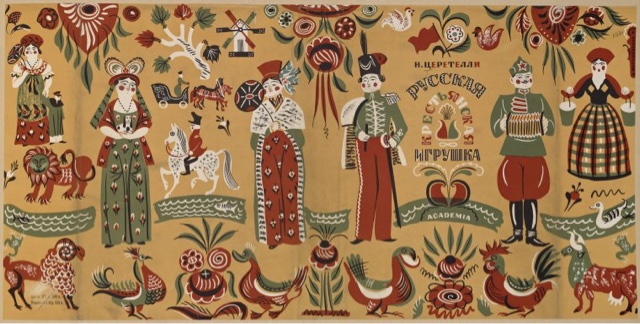
Pictures courtesy of the New York Public Library – Digital Collections: Scrap book of Russian bookjackets, 1917‑1942


Saturday, 30 January 2016

There (and back again) before first light…


A wise (or, on second thoughts, perhaps not so wise) man once tweeted:

Advice to the deaf/ened with tinnitus/musical hallucinations: never read music scores before going to bed. Woke up with one bar on repeat.

This is the price you pay, I’m afraid, for choosing Shostakovich’s Third Symphony as nighttime reading – in preparation for this evening’s Cheltenham Symphony Orchestra concert (for which I believe, at the time of writing, there are still tickets left – although goodness knows why…) – hoping to try and conquer that sad, seasonal disorder, Dark Theatre Syndrome.


Although a large pile of tickets for the end of the summer season, and the whole of next winter’s one, had arrived, yesterday… having come home from the rip-snorting, snot-frogging Wendy & Peter Pan at the RSC, in atrocious weather, late last night, I was truly saddened that another run of plays was finishing; that the sublime Swan company had already departed (leaving a grey absence hovering over their Waterside cottages), and the RST one was about to follow suit. This always happens, of course, regular as clockwork – and is only really erased by the next great performance (which I’m pretty sure will be A Midsummer Night’s Dream).

So I took Dmitri to bed – figuratively – scribbling more notes on his once-virgin score (I can’t link to my future review: because I haven’t written it yet… – but it will be here, soon, I promise); humming, for some strange reason, many of the brass parts, in my head. And they stuck.


So, to clear my mind – and the twenty-mile-an-hour westerly gusts certainly helped – I performed my usual, dark, insomniac ritual of bimbling to the church and back (disturbing several cats, and a rather startled gentleman in Saddledon Street, on the way). I arrived at St Mary’s just as the clock chimed quarter-to (seven): which should have given my ears the cleansing they so badly needed. And, as the first hints of day appeared, was accompanied by territorial robins – pipers at the gates of dawn; along Sandpits Road – also welcoming the light.

You would have thought that such tunefulness would have quenched all traces of The First of May. But no, the horns’ first, repeating entry is still with me. Perhaps the only solution will be to hear it for real. I cannot wait!


Sunday, 29 November 2015

This above all: to thine own self be three…


The unabashed melodiousness of Brahms is without apology.

I like to imagine Brahms wandering around Europe – or even just the Red Hedgehog Tavern – almost permanently singing. Strangely enough, his gruff baritone sounds exactly like mine! (Probably because his figure is not dissimilar.) Seriously, though: I can think of no other composer who wrote such gorgeous, memorable, all-encompassing melodies – not even my beloved Elgar (who, it could be argued, is Brahms’ natural successor).

All week, therefore, in anticipation of last night’s Cheltenham Symphony Orchestra concert in the Town Hall, the opening horn call (delicately wafted into the air by Laura Morris – and subsequently recapitulated perfectly by Kelly Haines) of his Second Piano Concerto – and all its ensuing high-contrast, explosive variations and developments – has been echoing through my head (as well as bouncing off the walls of the Bardic halls). This tune is, essentially, a short, simple thing (appearing as a rising tilde in the score) – which is where its power indubitably lies. But what the aging (‘mature’) composer does with it is nothing short of miraculous: not least the initial arpeggiated, ascending response from the piano (played warmly by the inimitable Peter Donohoe).

However easily lulled you may be by that gentle beginning, you are soon awoken by a cadenza (already! at bar 11!) manufactured from some of the most turbulent, breathtaking Sturm und Drang I can think of. (All those octaves in the right hand I think explain Donohoe’s comment, below.) Although this detonation soon recapitulates the main theme as a short-lived ground bass – and the orchestra then takes over – it is not long before the thumb-bashing returns: albeit after a few fortunate pages’ rest!


So – believe me: I tried and failed to learn to play it; and it nearly killed my hands (and the rest of me) – even though the work has been described as “really a symphony with principal piano” – this is, I think, one of the most outrageously challenging pieces in the solo pianist’s repertoire: “the perfect fusion of inspirational fire with… encompassing technique” – which, thankfully, of course, Donohoe, genial genius, has in abundance. He makes it look (relatively) easy – even those infernal, eternal trills. (Although I suspect he is actually the owner of an extra pair of hands – which may well really belong to Martin Roscoe – such is his wizardry.)

It was the last work Brahms added to his repertory as a pianist, and for someone who had long given up regular practicing to get through it at all is amazing.


Some of the orchestral tutti chord sequences in this first movement even foreshadow those of Shostakovich (see below) with their impudent might – although this may just be a trick of consistent orchestra-scape and canny programming – and yet this is truly beautiful music: albeit with a heart of sharpest diamond. And there is nothing playful at all, either, about the second movement (which tonight featured a breathtaking stop-on-a-sixpence moment from the violins…). “It is a tiny, tiny little concerto with a tiny, tiny little scherzo” wrote Brahms. (Ha‑ha.)

But the work never stops punching you in the guts with its emotional impact, aided by Donohoe’s majestic, ringing, virtuousic keyboard playing. His partnership (which it truly was) with conductor David Curtis and the CSO rendered it a monumental spiritual assault. And, like the Shostakovich that followed – after the well-needed interval – it features a killer third movement: “the slow movement that Rachmaninoff tried all his life to write” – where, temporarily, the cello (beautifully, hauntingly bowed by Andrea Harries: who received rapt, delighted attention from the generous Donohoe) takes the limelight: with what would later become the song Immer leiser wird mein Schlummer (‘Ever gentler grows my slumber’). Personally, I think Brahms constructed this movement so that the pianist would at least have a few moments in which to plunge their hands into a bucket of ice; or for the trainer to come on to the pitch with a magic spray and a few plasters. (Donohoe is too noble and gifted to require such things.)

[By the way, if you want to know just what a “challenge” this work really is (and not just for my clumsy paws): then I would suggest that you read this tremendous account by Stephen Hough – one of the greatest (and most modest) performers I have been lucky to witness – as well as this marvellous interview with French pianist Philippe Bianconi.]


The last movement – regardless of what anyone-else may tell you; and despite the hint of Hungarian dance rhythm and final march (again heading towards Shostakovich territory) – superbly controlled by maestro Curtis – completes the concerto perfectly. It is what the preceding three movements insistently lead to – it is what is needed… – a romantic, rhapsodic meditation on all that has gone before. It may not contain quite the huge number of previous fireworks: but there are moments where the piano’s bass pulses through the soles of your feet, before the treble gives your heart and head a damn’ good work-out. You have to cheer – especially with a performer as subtle and powerful as Donohoe… – as you really, really wanted to do at the end of the Allegro non troppo and Allegro appassionato, of course. You simply have no option.

And here he rewarded our enthusiasm – demonstrating his finely-tuned prowess once more – with a highly intelligent, but deeply soulful, engrossing encore: exhibiting what I know to be a rare (and valuable) combination of insight and fluid technique. [For the life of me, although I recognized it, I cannot dig deep enough into my fading brain to retrieve its composer or title. If you know, please get in touch! Thank you. (I have now been informed – by a certain Peter Donohoe… – that “The encore was Mozart's Fantasia in D Minor K397”. Many thanks! This was genuinely beautiful playing….)] He also crept into the audience after the interval – a rare and thoughtful act….

The B-flat Concerto dates from the start of Brahms’ ripest maturity, the period when his fame had reached a peak throughout Europe and his physical image as we know it best was fixed: bearded and corpulent.


Whilst the Brahms – one of the greatest Late Romantic ‘symphonies’, by last night’s reckoning – can prove hazardous for the piano soloist; Shostakovich’s Fifth Symphony provokes and questions the abilities of each and every member of any orchestra that dares confront it. Here, though, these readily-tarnishing challenges were transformed into golden opportunities – and the CSO explored the very heights of proficiency, authority and exultancy – giving rise to one of the greatest orchestral performances I have experienced. (And I write this – humblebrag alert… – having been around the world; and having witnessed many of the greatest musicians of the last fifty years….)


This is no extravagance; no overstatement. The music breathed. And therefore every single person who contributed to tonight’s astonishing achievement should be immensely proud of themselves. This was musicianship of the very highest order – from the conductor to the clarinets; the brass to the bass drum; the piccolo to the piano. (It is just so sad that the hall was only half-full. I am pretty sure we all knew how utterly blessed we were, though….)


From the symphony’s opening battle between the lower and the upper strings and its soaring melodies, to the sounds of hopeless oppression and finally to the triumph of the human spirit, Shostakovich brilliantly captures the conflicting moods of a time, place and people.

It would be all too easy, at least on the surface – especially considering the (parodic) startling re-entry of the triumphal (but threatening) brass in the last movement (with a rising three-note motif that echoes Brahms’ welcoming call – although this time in the minor: depressing that final note…) – to believe that, in writing his Fifth Symphony, Shostakovich had capitulated to Stalin’s directives in producing grandiose music to support his evil dictatorship: demonstrating the supposed superiority of the mighty Russian Bear during the godawful ‘Great Terror’. However, there is – right from the warlike get-go; its call to arms – and at its deep, deep, lyrical, tortured heart – what Peter Gutmann describes as “the clash between stifling ideology and irrepressible creative impulse”:

According to Stalin, music had to inspire and unite the Soviet people with uplifting messages. His taste was simplistic, but his power absolute. The Pravda party newspaper… branded Shostakovich an enemy of the people and condemned his work as chaotic, vulgar and perverted…. He was snubbed, performances of his works were cancelled and his career seemed over. Yet, he soon found a constructive cure for his pain…. He plunged into work on a new, more traditional symphony. There would be no mistaking its purpose. Shostakovich titled it “An Artist’s Creative Response to Just Criticism” and announced its program as “the stabilization of a personality of a man with all his experiences”. He proclaimed: “There can be no greater joy for a composer than… having assisted by his works in the elevation of Soviet musical culture… to contribute to the growth of our country”. When presented in celebration of the 20th anniversary of the Revolution, it was acclaimed a masterpiece, embracing the soul of the Russian people.

The composer initially described the finale as “resolving the tragically tense impulses of the earlier movements into optimism and the joy of living”. But, later, he rechristened it “a false optimism created under a threat” – akin to the “sadistic torture of being forced to smile while being beaten” – and implied that Stalin was “too dense to see through [his] parody and satire”: not realizing the “deeper and sardonic musical truth” (which, surely, to modern audiences – with the symphony’s industrial, weaponized brass section; satirical marches; and pleading, lyrical melodies – is so blatant that it cannot be ignored…).

I think it is clear to everyone what happens in the Fifth. The rejoicing is forced, created under threat, as in [Modest Mussorgsky’s opera] Boris Godunov. It’s as if someone were beating you with a stick and saying, “Your business is rejoicing, your business is rejoicing”, and you rise, shaky and go marching off, muttering, “Our business is rejoicing, our business is rejoicing”. What kind of apotheosis is that? You have to be a complete oaf not to hear that. People who came to the premiere of the Fifth in the best of moods wept.


The crux of that weeping, for me (and, I suspect, for many others), is the brass-less Largo, which “is the work’s emotional core” – “one of the most despairing pieces of music ever written, a memorial for Mother Russia and all those sent to the labour camps”. And, although this exquisitely-scored lament uses themes from the preceding two movements, I think it is as close to the surface, and as close as you can get, to reading Shostakovich’s true intent: his fear and agonized despondency – even his hatred.

I agree: “there are no words” for last night’s rendering of this. All I need write is that I closed my eyes; and let the music immerse me in the inevitable purity of sorrow; the inescapable sobs gently washing and wracking my face…. The pace was perfect; as were the dynamics. I will jump to the end, therefore, and just say that those concluding ethereal harmonics from the harp are tough enough – for both audience and orchestra – without the following building Blitzkrieg chord from the full forces of the brass, woodwind and timpani which set off that last, knife-twisting lurch toward death. Thankfully, Curtis paused.

Here, in the coda, he then once more showed his shrewdness – and fulfilled his desire to “always tell a story” with the music – in finding a middle way between the ‘traditional’ fast and triumphal European dash to glory; and the more Russian, slow, tragic and disintegrating weariness. What we experienced was therefore no victory parade – hollow or otherwise. On the weekend of the Stop the War protests and the Climate Change March, these hammered, screaming, repeated chords felt like a forced procession to the scaffold for the whole of humanity.


Like the Brahms concerto that preceded it, this confrontational, testing symphony could be by no other composer. (The works share an expertise in orchestral technique and exploitation – for want of a better word – that is almost unsurpassable. And yet they are Germanic chalk and Soviet cheese in their differences: despite their parallel, emotive appearances and similar dynamic oscillations.)

Pardon my Cyrillic: but Shostakovich’s Fifth, with its gradual, initially deceptive, relentless urge – especially in this performance – builds to such a ball-kicking climax that it is sometimes hard to breathe. (The Brahms achieves such damage in a markedly discreet and more riverlike way.) As it progresses, the symphony swings from gentle massage to such exquisitely-timed assault that you may also find yourself – as I did – almost panting with the inflicted pain. It is tragedy of the most heart-piercing kind – a “long arc… of a bittersweet, aching intensity” – and I do not envy those who have to perform it – although the CSO, under the tight helmsmanship of an obviously emotionally-wrought Curtis – were sensational in their pure and sure commitment.

At least we in the audience had the release of tears, and the comfort of our handkerchiefs. All these poor musicians could do was play on through the terrifying, harrowing, inferno. (Even when Shostakovich appears to be lightening up a little – or even taking the mickey – he is nothing less than intensely serious in his aims and methods. And it shows. (I think the same can be said of Curtis, below, by the way.))


Earlier in the week, Curtis had said to me that “after the Shostakovich, I’ll need a stiff drink”. (Only one…?!) And so did I. This was music that really, really hurt – but in a good, masochistic, cleansing sort of way. (Oh, the power of a good tune…!) But, although he headed homeward for “a stiff gin and tonic” (there must be a musician’s punchline in there, somewhere…!), a thick, dark coffee had to suffice for me (albeit tinged with brandy) – otherwise this review would simply have been one very sharp, climactic expletive.


By the way (just to lighten things up a little): the concert began with a warm-up overture – again, as the programme notes told us, “Three arresting brass chords open the piece… they symbolize a vow of vengeance” – by some obscure ‘Joe Green’ bloke. (Thank you, Dad!) I’ve never really liked Verdi – apart from the heavenly Requiem (it’s great to sing; and features some muscular timpani and bass drum parts…) – but this was entertaining enough!

What it did achieve – seriously and melodiously – was to set the stage for the themes of agonizing tragedy and false triumphalism – the magnificent and dramatic “forces of destiny” – which followed. If Brahms paints paradise, Shostakovich hollows out for us the horrors of hell on earth. Both of which have left me utterly wrecked. Wow.


The moon emerged from behind the earlier storm-clouds to guide me home. I did not want the glow of my iPhone to compete; nor the sound of anything to disturb the now-Russian melodies entangling themselves in my overwhelmed brain. This music of “thought-provoking programming” and formidable skill will stay with me for a very long time. And yet I still must luxuriate in its vigorous freshness. For as long as I possibly can. Thank you; and good night….