Monday, 21 March 2016

In heaven, send thither to see…


It was the new banner on The Other Place that brought it home to me. Not only was the Swan emerging, glinting, from its hibernal cocoon of scaffolding and plastic sheeting; but I had looked forward to TOP’s coincident opening with the first day of spring for a while… – and now it was imminent.


Despite the chill breeze, the sun hinted that the days of padded jackets would soon be past. Holidaymakers picnicked on the grass by the Avon, revelling in this newfound freshness. And suddenly – although it is easy to mutter about the clutter of tourists, they are, of course, Stratford-upon-Avon’s lifeblood… – the place felt ‘right’. This is how it is meant to be. The ferry rattling across the river. The ice-cream vans. The RSC’s Riverside Café terrace filled with customers. It was as if the whole town had been painted with an instant smile. And my spirits, too, were lifted. Spring was in my very steps.


Still, it is good to have the place to oneself, occasionally – and, even during summer, one can pick a time, wisely, to achieve this. Just over a week ago, though – with the Rec deep under water; most of my well-trodden paths impassable; and the thick fog rendering the familiar mysterious (as if part of a delicate Romantic Japanese brush-scape) – after having tentatively tiptoed along flooded roads, this was almost solely my domain.


Walking the same route most times I visit Stratford, I find solace in the subtle changes brought by not just the seasons, but the weather; the moods of the river; the removal and planting of trees; the understated moulding of the built environment around me. Sometimes – although I know their familiarity is motivated by easy greed – it almost feels as if the swans are my friends, here: their presence a permanence; and also an accompanying, constant comfort.


In the dullness, though, most birds were silent. A week later, under clearing skies, blue and great tits sparkled in the hedges; and a group of redwings and fieldfares – a wonderful surprise – chattered in a small copse: greeting me with feigned annoyance, but not moving from their temporary camp. Rooks fought noisily for the smallest of twigs; and blackbirds scurried alongside me, foraging for food and bedding amongst the Avon’s freshly-deposited gifts.


Dog-walkers – and their excited pets – also seemed more energetic; although still wrapped against the wind.


Where winter had been all too evident – where the water had claimed and cleansed its widening banks, and scoured the bridges… – all that was left were those small hints of debris: wrack, dry as raffia, tangled into seatbacks; branches attempting escape downriver.


Spring has finally sprung; and, hopefully, my mood, too, will soon follow. Not that I don’t enjoy winter – I love it equally with its partner autumn – it’s just that the warmth is kinder to my aching body; and the growing days present more opportunities to witness the beauty around us.


Sunday, 13 March 2016

Life can only be understood backwards…


Prokofiev completed his second piano concerto in 1913, dedicating it [after completion] to his Conservatory friend Max Shmitgov, who had committed suicide in April, shooting himself in a forest in Finland, after writing a farewell letter to his friend Prokofiev. Learning the solo part was hard work and he spent part of summer in preparation, while accompanying his mother on a tour of Western Europe that took them to Paris, to London and then to a spa in the Auvergne, before a brief holiday near the Black Sea. On 23rd August he played the concerto for the first time in a concert at Pavlovsk, provoking a very divided response of outrage and horror from some and ecstatic approval from the more progressive.
     The orchestral score of the Piano Concerto No.2 in G minor, Opus 16, was destroyed in a fire [or at least lost], during Prokofiev’s absence from Russia after 1918, and was rewritten in 1923. In Paris in the summer of 1914 Diaghilev showed interest in what seemed the work of another of the fauves and suggested using the music for a ballet, eventually commissioning a work on a primitive pagan libretto, Ala and Lolly, which, when it was rejected, became the Scythian Suite, music that Glazunov found even more distressing. In compensation for rejection of Ala and Lolly, Diaghilev arranged a concert appearance for Prokofiev in Rome in 1915, when he played the concerto to the expected mixed response.

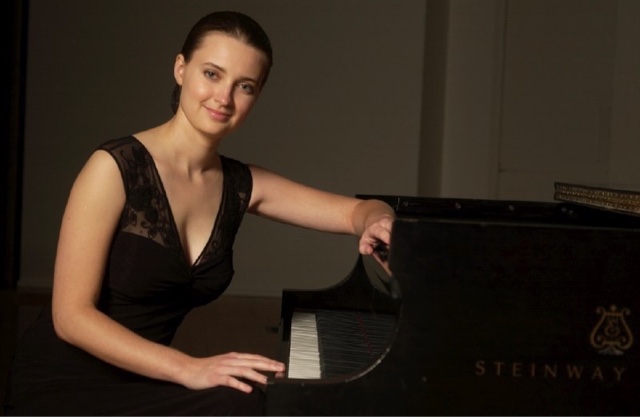
In my last CSO review, I wrote that I was looking forward to Anna Shelest’s return to the Cheltenham stage “with a great deal of impatience and musical greed”: especially for her performance of “Prokofiev’s (let’s be kind, and just say ‘challenging’ – two hands may not be quite enough: although I am expecting it to look like a gentle stroll in the park, after tonight…) second concerto” – intimating, of course, that this is one of the most difficult pieces in the concert pianist’s repertoire (and that was just from my being intimidated by the amount of ink in the score).

It does have a fearsome reputation, though – which may explain its ‘underappreciation’ when compared with his more popular third concerto:

It remains one of the most technically formidable piano concertos in the standard repertoire. Prokofiev biographer, David Nice, noted in 2011: “A decade ago I’d have bet you there were only a dozen pianists in the world who could play Prokofiev’s Second Piano Concerto properly. Argerich wouldn’t touch it, Kissin delayed learning it, and even Prokofiev as virtuoso had got into a terrible mess trying to perform it with Ansermet and the BBC Symphony Orchestra in the 1930s, when it had gone out of his fingers.”

One ranking – by pianist Pierre-Arnaud Dablemont – places it at the very top of “the five most difficult piano concertos” (and I thought that Brahms’ second was difficult – it only creeps in at number four…!); and, similarly, Paul Huang has this to say:

Prokofiev’s 2nd [is the most difficult piano concerto to perform] because of its 10+-minute, soul-crushing, endurance-testing cadenza. The longest in standard repertoire. It also has a notoriously difficult scherzo that lasts only 2.5 minutes or so but in which the pianist never stops playing 16th notes [semiquavers] in either hand. Not for a single rest. These notes have to be perfectly even and in unison. You can’t hide difficult parts with rubato. Make one mistake and you’re out of sync with the orchestra. You can't use pedal. Clarity is essential. Each note has to be articulated. To produce this effect is very exhausting. It requires fingers of enormous strength and stamina.

It wouldn’t surprise me, therefore, if I was not the only person in Pittville Pump Room to be experiencing (“hearing” seems far too feeble a word) this work live for the first time. But, wow, it was worth the wait! Although many at the première – coming just four months after the scandalous first performance of The Rite of Spring – obviously did not agree:

On the platform appeared a youth looking like a Peterschule student. It was Sergei Prokofiev. He sat down at the piano and appeared to be either dusting the keyboard or tapping it at random, with a sharp dry touch. The public did not know what to make of it. Some indignant murmurs were heard. One couple got up and hurried to the exit: “Such music can drive you mad!” The hall emptied. The young artist ended his concerto with a relentlessly discordant combination of brasses. The audience was scandalized. The majority hissed. With a mocking bow, Prokofiev sat down again and played an encore. “The hell with this futurist music!” people were heard to exclaim. “We came here for pleasure. The cats on the roof make better music!”
– Sergei Prokofiev: Brief Autobiography


This quite astounding work (and I mean that in a good way) – which, with its relenting pace (and absence of a true slow movement), is as much a challenge for the orchestra and conductor as it is for the soloist… – could only be by Prokofiev. And, despite the massed influences of various Russian predecessors – Tchaikovsky, Rachmaninov, Rimsky-Korsakov, Glinka, etc. – it really could only be by Prokofiev. With its use of classical structures, forms and harmonies to produce something essentially modern – indeed, this is essential Prokofiev. And at his greatest, I believe.

Here – revisiting the score, once home (and which I had open on my lap, in awe, during the concert); remembering Shelest’s incomprehensibly brilliant tour de force exposition – is my rather stunned account!

The opening Andantino lulls us into a Rachmaninov-infused sense of security. “Oh, we can sing along with this caloroso con gran espressione – it’s so beautiful”, you might say. But it soon becomes apparent that this is just a warm-up passage for both the soloist and audience. Forte arpeggios – followed by rolling hills of piano scales – produce a sense of foreboding. And a change of pace to Allegretto; and a new rhythm, repeated insistently four times – however ‘elegant’ the piano’s subsequent re-entry (to my ears, more mechanistic, more ironic…) – eventually leads to a passage of spiky ferocity. The storm has begun. And yet, there are thoughtful moments at a slower pace that can lead you astray… before, yes, the most gargantuan cadenza ever written (apparently, initially, scored for three hands – meaning much crossing of arms for Shelest) gets underway.

This is, effectively, the development section of the first movement – and yet it focuses on just the one theme: the piano’s opening Rachmaninovian melody, which soon disintegrates into powerfully-expressed exhibitionism and a momentous landscape of that dreaded black ink! And just when you think it has reached its fortississimo climatic conclusion… – with oscillating triplet semiquaver runs, over a foundation of leaping left-hand crotchets, spelling out a counter-tune (“one of the hardest places in the concerto”, according to the composer himself…) – it just keeps on going!

But Shelest handled it with aplomb: keeping that ‘hidden’ melody well-stressed and vocalized, despite the surrounding ornamentation. Immersed deep within the music (as well as the keyboard), her concentration never wavered; and, despite the ongoing acrobatics, and a collision of keys (of tonality – C# minor and D minor simultaneously – not bits of the piano falling off…), generously looked up at David Curtis, the conductor, to coordinate the orchestra’s re-entry. Although this starts softly… again, it is a trick – there is an immediate, time-compressed crescendo from piano to fortissimo; and the mayhem continues with the brass, emphatically underlined by the timpani, reiterating the very opening theme (originally lightly pronounced by the clarinets and pizzicato strings).

As always, the CSO heavyweights shook the very walls of the building. This was very much the effect they had produced in the final movement of Shostakovich’s Fifth Symphony – huge blocks of fundamental, elemental sound. Two lightning cymbal strikes: and the storm is over. (But, oh, to frolic under those dark skies; feel the heavy, wakening rain on your face; be so very in tune with nature…! There is joy in the mania; there is melody in the cacophony; there is enlightenment in the punishment. This is sadomasochism in music. And, boy, it felt great…!)

But, suddenly, we revert to that gentle opening soundscape – fading, fading, fading… – and the movement (like nothing else composed before or since) is complete.


Prokofiev has been accused of lightly orchestrating a piano sonata – but that closing of the first movement, and all of the second movement – that perpetuum mobile of a Scherzo – proves those critics wrong: there is some amazing, challenging string and woodwind writing (easily conquered by the CSO, as always) either side of the piano’s trickling, twinkling torrent of constant semiquavers. It is almost as if we are following the heavy rainfall from the first movement downstream – with its sudden mood changes – as it surges towards the sea….

Again, Shelest plunged in: never once, as far as I could see, lifting her head from the keyboard; keeping perfect time, with wonderful dynamic variations ebbing and flowing. To say that she provided a metronomic beat for the orchestra implies a lack of feeling – but this was expressive playing, surmounting the technical exercise that appears in print.

Such music must also be a nightmare to conduct – despite the constant 2/4 time, there are some astonishing changes of rhythm and volume – but, whatever fear (if any) he may have felt, David Curtis made it look relatively easy. He has built trust with this orchestra – as well as with Shelest – and it shows. The occasional interjections of brass (startling trumpet entries) and threatening percussion were utterly precise; yet somehow rendered this movement less ecstatic than it initially appeared. The flying arrows of the flutes and first violins also threatened to destabilize all forward motion. But everything punched in precisely on time. A fleeting motif in the cellos and oboe (which, only later, did I realize forms the basis of yet another bruising, baleful brass exclamation in the final movement) seemed momentarily to pull things together. But, on on we go! And then we stop. Just like that. Golly. All that music; all those notes – and so little time had passed.


You would think that a slow movement would be needed, after all that – especially for the soloist. And it is. But we don’t get one. Instead, the Intermezzo is marked Allegro moderato – and the instruments are told to play pesante (not like peasants – although they might as well be – but ‘heavily’…). There is no respite. And the members of the CSO gave all they had: marching as to war.

This is Prokofiev at his most Prokoviesque, you might say – and the sprightly piano entry (surely, the poor girl deserves some sort of break after all those semiquavers?!) just adds to the menace: mocking the orchestra’s stateliness with grotesque, off-beat chords, before a solo of surprising beauty. (If the Scherzo demonstrated Shelest’s technical prowess, this allowed her to return to the emotional lyricism of the first movement.) But this is a temporary state of affairs; and the mocking resumes – although what initially appears to be a climax dissolves into a light soufflé of arpeggios and runs, and more “light orchestration”.

Shelest then has a brief – again spiky – solo, before the orchestra decides this is a game it wants to play, too. Gradually, everyone joins in; there are a couple of menacing piano trills (with phenomenally scary muted brass accompaniment); the strings refuse to stop marching – albeit in slippers. But Maestro Curtis says “No more; no more”. His authority is final.


The Intermezzo ends quietly on a very low note: so, the astonishing fortissimo opening of the Finale, five octaves higher, felt like an attack of screaming demon angels from above. What initially sounds like a sprint – with Shelest jumping manically up and down the keyboard (figuratively; or fingeratively…?) – eventually resolves into a fragmentary theme; before a tempestoso climax. The thundering gallop of chords (reminding me of the cowboy movies that my dad is addicted to…), as the music forces Shelest to look like she may spread wings (there is no way to make this music look anything but utterly impossible to play – it is so physical…) – thus leads to that brassy reclamation of the Scherzo’s mini motif.

Suddenly, everything stops. Soft discords – bell chimes – in the piano are interrupted by unrest in the lower strings (was that ‘Dies Irae’ I heard…?). For a while, then, these are joined by the clarinets and bassoons, whilst Shelest finally – finally – gets the break she deserves! But not for long.

The succeeding solo passage is a simple, wistful one of great beauty – recalling the first movement, somewhat, in what could be described almost as a ‘lullaby’. (This also reminded me of the solo pieces of Mompou – such was its grace.) The bassoons (ah, bliss!) then take up this wandering theme, as the piano elaborates, and more and more woodwind and strings join in. (It is like being sung to sleep by a full chorus… – accompanied by a gargantuan brass band…!) The piano will not let go of the tune, though. Eventually, those woodwind and strings take over: upping the pace. A dialogue ensues. This is the rush to the end, isn’t it? Yes. The end. (In fact, the most final sounding, bloody emphatic cadence you have ever heard.)

But it isn’t. More trickery. I was waiting for someone to applaud. But we were so rapt: we could see from Shelest’s physical attitude that something was about to happen.

Indeed… a momentous, moody rumination develops from her earlier bell-like discords. And – oh yes – eventually, the bassoon comes back with its lullaby – but only so that Shelest can demonstrate her pugnacious, unrelenting virtuousity. A period of development (and swaying key changes) follows, before the mist moves in. The sudden foghorn blast that ends this short, spooky passage leads to a reprise of the beginning of the movement, and the real, build-upon-build, ever-growing climax. This really is it. The end. Fabulous. Reader, I wept. Reader, I cheered!


The applause and standing ovation given to Shelest was not enough. It never could be. She had partaken in the pianistic equivalent of a triathlon – simultaneously performing all three disciplines: technique, emotion, stamina… – and won. By a huge margin. This was heroic, amazing dexterity; beautiful, moving, percussive, lyrical playing. Astounding, unflagging talent that will stay with me for ever.

I never believed I would experience this piece played live. And, now I have, I do not want the experience erased, sullied by another performance. I simply cannot imagine the replication of such concentrated musicality. Instead, I will listen to Shelest’s recording on repeat, whilst gazing longingly at the tear-stained pages of the score she so gracefully signed.

This was a once-in-a-lifetime event. And all I can do is say a huge thank you to those who contributed. My night – or so I believed… – had been made.


But I had, of course, forgotten Maestro Curtis, and his handfuls of magic dust. Having already sprinkled a few grains on the CSO – their wizardry a necessary component of the Prokofiev – he shook his pockets out over the stage; waved his magic baton; and headed off for redemption via Stravinksy’s awe-inspiring Firebird Suite. If the Prokofiev proved the perfect vessel for Shelest, then this was the orchestra’s – equally proving their virtuosity in all departments.

No names, tonight. All players were inspiring: alone, and in combination. Reader, my soggy handkerchief was not enough. Someone please bring me a bucket…. (And better make it a double.)

This was joyous: an exhibition of control from Curtis, and delight from the CSO. It is as challenging a score, in many ways, as is the Prokofiev for the pianist. But the orchestra luxuriated in its difficulties, producing shimmering dynamics – who knew so many instruments could make so little a sound…? – and making changes of speed instantaneously. This was their showpiece. Or should be. A little bit of a miracle to end a wonderful evening…


…which had begun with Tchaikovsky’s Second Symphony – not, for me, one of his better works (and that is pretty much all I have to say on the matter – except that it was, of course, performed with as much energy and skill as everything else; conducted by a man with the happiest, most contagious grin in the Midlands – despite this being his fourth concert of the week…).

It made sense, really. If that (possibly nightmare-inducing) “lullaby” in the final movement of the Prokofiev had the insistence – and modality – of a folk song, then this was constructed from (at least) three of the real things: hence its nickname of ‘The Little Russian’. The Stravinsky, too, is folk-tune based. And so it made for a well-constructed programme – even if it was played in the reverse order of its original billing: a clever trick which made sense of the music, chronologically (sort of), and melodically.

Note
A more ‘formal’ – and much shorter – version of this review can be found on the Gloucestershire Echo website.


Postscript
By the way, I don’t really know if “crying is good for you” – it certainly feels it, to me (as it does to most): especially with music of this calibre, played so movingly, so flawlessly. Ergo, if men really are sobbing only “six to 17 times” a year (as a recent study indicates), I really do think they should start attending more high-class orchestral concerts, such as this; letting their sensitivities and sensibilities hang out; whilst perhaps channelling their inner Roy Orbison.

This was catharsis – what Aristotle might have called “the purging or purification of the emotions”, perhaps achieved through the witnessing of theatrical tragedy – of the most unalloyed, most curative kind.

Saturday, 12 March 2016

That’s life…!


That’s life (that’s life), that’s what all the people say
You’re ridin’ high in April, shot down in May
But I know I’m gonna change that tune
When I’m back on top, back on top in June

I said that’s life (that’s life), and as funny as it may seem
Some people get their kicks stompin’ on a dream
But I don’t let it, let it get me down
’Cause this fine old world, it keeps spinnin' around

I’ve been a puppet, a pauper, a pirate, a poet, a pawn and a king
I’ve been up and down and over and out and I know one thing
Each time I find myself flat on my face
I pick myself up and get back in the race

As regular readers of this blog – if any such creatures exist… – will know: I do not like, generally, to only attend one performance of a play. There are too many variables – and I believe you never see quite the same show twice.

I think I got all eleven scenes right at some point, but not on the same night. It’s like serving at tennis: some of the balls are aces, and some go into the net.
Michael Pennington, in Performing King Lear by Jonathan Croall

A great deal, of course, depends on the audience: as returning to The Woman Hater, last night, quickly demonstrated. On Wednesday, those watching had been somewhat partisan – parents, peers, and those, like me, who just had brought a huge bucket of goodwill with them: wishing Edward’s Boys a whole heap of luck on their opening night; on the opening night of The Other Place… – and it showed. Especially in the first half, we hardly ever stopped laughing. We were willing the company on; and our appreciation was heightened by their concomitant response.

Last night, though, let’s just say it was a more ‘formal’ audience (although yet another full house…). Perhaps the majority did not know what to expect; or weren’t acclimatized to the barrage of early seventeenth century word-play? It was only when Mambo Italiano hit the runway, with the exuberant Jack Hawkins (as Oriana), that you could see the audience finally relax – aided and abetted by Joe Pocknell’s wonderful joshing and ad libbing (as Count Valore, below), giving them permission to have fun:

What Nobleman is that? all the Gallants on the Stage rise…

Although still not quite as responsive as Wednesday’s crowd, this did not appear in any way to affect the company. If anything, they rose to the occasion; and I felt that the play flowed even better (especially the ending; and the epilogue’s transposition into the final song and dance…). The cast – even though they hadn’t shown any first-night nerves – had tweaked those tiny misfires; checked there were no loose connections; and, as a result, the engine driving, powering them on, was now perfectly tuned. Even if the audience wasn’t as involved, this didn’t mean that they wouldn’t give the best performance possible!


Additionally, a second viewing enables you to spot those things you missed before. And I felt, this time around, that Dominic Howden (Lucio) – especially in the Lazarillo ‘trial’ scene – exhibited great strength. This was power and confidence in habitual display:

Sir, your long practice in the State, under a great man, hath led you to much experience.

Additionally, Finlay Hatch (Duke of Milan) was even more convincing, I thought. There was a noticeable weight removed from his shoulders – a change from stiff to relaxed; glowering to content – when Oriana said yes to his ‘proposal’:

Best of all comforts, may I take this hand, and call it mine?

What I should also reinforce is all of the actors’ innate maturity. Off the stage, each one is simply “the whining schoolboy, with his satchel And shining morning face, creeping like snail Unwillingly to school”. But, once in character, they are that character; and they are whatever age (and sex) they are required to be. Quite astounding, really – but such is the transparency of (what I can only call) the great thespian’s art.


Having been immersed for far too long in Jacobethan/early modern drama, only at the interval did I register the sheer invisibility of the actors’ consistent – and enviable – ability to also render four-centuries-old language into conversational, comprehensible, natural-sounding English. [As this is not always the case, even with professional actors, I will be taking a look at some of Edward’s Boys’ previous productions on DVD – especially at Henry V – there to revel in my favourite Shakespeare speech – “This day is called the feast of Crispian…” – and to see how it stacks up against Larry Olivier!]

As Mark Ellis – who is in charge of publicity; and produced the programme (including taking all the cast photographs); and to whom I owe much thanks… – also pointed out to me – which, again, was a property of stagecraft so transparent that, I suppose, I had previously taken it for granted – was – especially with the absence of any sort of set or stage design – the boys’ ability to imply, to create, the spaces around them: making you feel you were there; were also seeing what they were imagining, manufacturing… – not only with their dialogue, but with their actions (and re-actions). It felt as if they were painting four-dimensional pictures for you, on the blank canvas of the bare walkway, in the air, and in time. Building the walls (and when so closed-in by the audience that sometimes those walls were the audience; other times, making us fade beyond mere furniture, or obstacle… or even presence…) – and piercing them with windows and doors – and all in your mind. One moment, the Mercer’s clothes shop. The next, outside, in the streets of Milan. Or in Gondarino’s house: with a hailstorm rattling on outside. The intangible made solid.

Only at the end did this fabric ‘dissolve’ – the shifting, shuttering fourth wall becoming permanent again… – as everyone gathered on stage: gradually building to a whirling dervish of a group scrum, whilst singing That’s Life with as much happiness and vigour as one could ever hope for! (And after all that hard work.) A great way to finish – an essential summation of all that was so very, very special.

Thursday, 10 March 2016

And the piece of Cod, which passeth all understanding…

Artwork by David Troughton/Edward’s Boys

Why and how choirboys originally chosen to sing hymns came to be part-time actors in Christmas pageants and morality plays, and then recruited or forced to be full-time actors in immorality plays, is itself an interesting story, but when Beaumont and Fletcher were starting out, boys companies like The Children of St. Paul’s were all the rage in London. For the English gentry to gather in their darkened ‘private’ theatres to hear and see a rosy-cheeked, soprano-voiced choirboy in a dress tell another rosy-cheeked alto-voiced choirboy in a beard, “It is impossible to Ravish mee, I am soe willing” …well, maybe what is true for all theatre – and not for television – is especially true for the 17th century: you had to be there.

I was there. Not time-travelling (well, not so much; although yesterday morning’s weather was most apt). Yet it did feel like a little piece of theatrical history was being made.

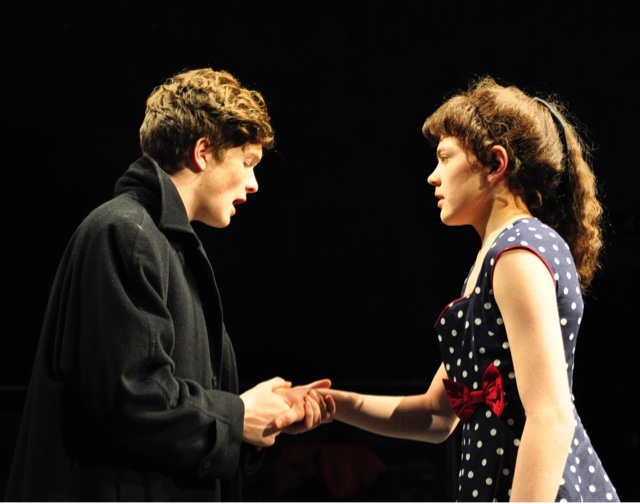
Having been, initially, dragged to plays at “the most productive tin hut in history” when I was a reluctant teenager; and having witnessed my last, most memorable, King Lear there, just before it finished its duty as The Courtyard Theatre; last night I was fortunate to be in the audience for the opening night of the first drama to be staged in the resurrected The Other Place, and its new, intimate Studio Theatre – The Woman Hater, by Francis Beaumont (possibly with a little help from his friend, John Fletcher – see below); presented by Edward’s Boys, directed by Perry Mills; and billed as “a lost gem of Jacobean theatre whose themes of gender politics, racial tension and homeland security are strikingly relevant to our day”:

An outrageous City Comedy and sharp satire, The Woman Hater was first (and last) performed by “Paul’s Boys” in 1606. Beaumont’s first play is now revived by Edward’s Boys, the renowned boys’ company from Shakespeare’s School. Previous successes include The Lady’s Trial and Galatea at the Sam Wanamaker Playhouse and Henry V at the Swan Theatre.
     This production is set in 1950s Italy and features live music, an outrageous parody of the discovery by spies of a plot to assassinate the Leader of State (a few months earlier London had been shaken by the exposure of the Gunpowder Plot) [“Oh, Fawkes!”] and many satiric references to the plays of Shakespeare [including “a pair of deceitful legs belonging to a glover’s son at court”]. And a fish head


If Beaumont is mentioned at all these days it is usually in conjunction with his more famous collaborator John Fletcher (“Bo’mon’n’Fletcha”!) – probably a result of the fact that “Fletcha” also collaborated with someone called Shakespeare. However, Beaumont wrote plays on his own and one at least, The Knight of the Burning Pestle, has a strong reputation following several successful productions in recent decades.

Oh, and like that “someone” – i.e. another “leading dramatist and poet” (and I don’t mean Cervantes) – it is also four hundred years since Francis “never more than Frank” Beaumont died – almost to the day – on 6 March 1616. (He, too, is buried in his local church – in this case, Westminster Abbey.)


Beaumont juggles four plots with considerable ease, offering a bit of something for everyone: farce, bawdy wit, court satire, and a ‘high’ romantic plot.
– Lee Bliss: Beaumont and Fletcher

There is probably very little reason (or sense) in attempting to explain the story, and its multiple strands, in detail – probably because what there is of it – as you may have surmised from the snapshot above – is both happily ludicrous and sadly (perhaps) not quite fully developed (in other words, perfect for contemporaneous opera). To be honest, none of this really matters – although, with a little added exposition, and a bit of tinkering under the hood (oo-er, missus) – I think the play could be just as insightful (and even as feminist) as, say, The Roaring Girl. Although I’m still not quite sure why (even after re-reading the original text) – although I suspect it was down to the accomplished, gleeful camaraderie of all involved… – it was certainly just as uproariously entertaining: at least as presented here!

What narrative there is, though – and there are, of course, those subplots of increasing preposterousness: which somehow almost manage to conjoin (fnarr fnarr), to resolve into something meaningful – is enough of a skeleton for Edward’s Boys – “one of the hottest tickets around” – to clothe it in sumptuous fabrics of great joy, confidence, humour; and then reanimate it with the ultimate skill, and extremely ribald wit. (Try saying that quickly.)

The Prologue (adapted for this production) is, however, a little disingenuous. As this run’s publicity so gleefully proclaims: “like many of the boys’ plays, it is filthy, shocking and deeply offensive in general” (nay, nay, and thrice nay…) –

Gentlemen, Inductions are out of date, and a Prologue in Verse, is as stale as a black Velvet Cloak, and a Bay Garland: therefore you shall have it plain Prose, thus: If there be any amongst you, that come to hear lascivious Scenes, let them depart: for I do pronounce this, to the utter discomfort of all twopenny Gallery men, you shall have no bawdery in it…. I dare not call it Comedy or Tragedy; ’tis perfectly neither: A Play it is, which was meant to make you laugh, how it [will] please you, is not written in my Part: for though you should like it to day, perhaps your selves know not how you should digest it to morrow….

A pertinent admonition to reviewers – such as I – if ever there was one. (So I will be going back for the second showing – just in case.)

Finlay Hatch (Duke of Milan); and Jack Hawkins (Oriana) – photo by Mark Ellis/Edward’s Boys

I came away with great joy in my heart; as well as Mambo Italiano cycling gleefully around my mind. That decision to set the production “in 1950s Italy” (“Milan in 1954”, the precise programme notes tell us…) paid dividends: allowing echoes of the Mafia (a conscious violin case in the opening scene; readily-drawn pocket revolvers as weapons; natty suits, matching hats; and incredibly stylish, fresh haircuts…) and the Rat Pack – as well as some deft religious hints – to link cleverly with the overall tight-knit nature of the dramatis personae.

To say I was impressed with the calibre of the acting would be an understatement. There was a cohesive confidence that almost glowed…. But where to start? The top of the cast list seems like a good idea! (Just for the halibut.)

Finlay Hatch was a suitably menacing and petulant, potent, lovelorn Duke of Milan (or, possibly, the Codfather… (if you can think of a better title, please let minnow)): ready, at any moment, with his strong, physical presence, to ensure – via his reliable henchmen (or ‘Servants’) – that anyone who got in his way would soon be sleeping with the fishes. (No: not like that… – although Daniel Power’s galloping gourmand, Lazarillo; “a voluptuous Smell-Feast” – just the right side of caricature – certainly wouldn’t have minded!) Joe Pocknell was utterly superb as the manipulative, swaggering Count Valore – although there was not much ‘valour’ (apart from constant loyalty to his sister, Oriana) to be found in the way he constantly manipulated those around him. This was a suave and sophisticated central performance of great merit and maturity. He ruled the stage, as well as those around him.

Ben Clarke showed great emotional depth as Arrigo – especially in the scene where he confronted Oriana. He is not quite the stooge he first appears to be; and his development throughout the play was beautifully measured. Dominic Howden (who was also half of the sound production team), as Arrigo’s sidekick, Lucio, also grew in power and presence (oh, behave!) – especially in the scene where he dons his “Gown I use to read Petitions in”, and proceeds to (try and) condemn Lazarillo to be hanged for the treason he so obviously hasn’t committed. [Are you following this? Follow the umbrana, and it all makes sense. I promise. (You could say that it was all just a little bit fishy, to be honest. In fact, I was surprised Robson Green wasn’t on stage, with his tackle out. (Madam – please…!))]

Daniel Power (Lazarillo); and Ritvick Nagar (Boy) – photo by Mark Ellis/Edward’s Boys

Ritvick Nagar – as Lazarillo’s ‘Boy’ – was my performer of the night (but only by the teensiest of whiskers): shadowing (with a clever reversal of grease-stained-and-spotless, monochrome costumes) his ‘master’ effortlessly; continually taking the, er, piscatorial; always ready with a retort. Like many such servants – Volpone’s Mosca; or Valentine’s Jeremy – his job is the reverse of its description: he taunts, rather than assists; ridicules, rather than attends; and yet, is somehow, always at hand – with a keen sardonic smile – to not quite deliver what is asked of him. This kid will go far, that’s for sure!

Pascal Vogiaridis was surely born to play Harry Potter, with those glasses… – and was a sparkling delight, every time he appeared as the Mercer (“he deals in fancy fabrics”): even when duped into marriage. His slumped sadness, though, at such a fate, tugged at my heartstrings. George Hodson, as the Pandar (“a Pimp” – echoing The Jew of Malta, perhaps) who so niftily lures the Mercer in, wore his confidence constantly as a snide badge of pride. (Boo, hiss!)

Adam Hardy and Isaac Sergeant kept cropping up all over the place (as ‘Gentleman’, ‘Servant’, ‘Mercer’s Prentice’, etc. – as well as some rather hefty “ladies” at the end, I think: it was hard to tell under those wigs…); and, along with Nick Jones and Alistair Campbell – as a pair of almost Marxian (and utterly stupid) ‘Intelligencers’, or gumshoes (always getting the wrong end of all the sticks thrown at them by Valore) – demonstrated keenly the consistent strength and depth of the cast. As the closing number so ably showed: this was a company built on mutual admiration and support… – so thrilling to see in actors this young.

Adam Hardy (Servant 1); Daniel Wilkinson (Gondarino); and Isaac Sergeant (Servant 2) – photo by Mark Ellis/Edward’s Boys

So what about the ‘female’ members? (Yes, missus.) Jack Hawkins’ portrayal of Oriana [Valore’s sister – remember?] was a thing (no; just no…) of magical, magnificent, studied strength: from her effortless, endless teasing of Gondarino (the titular – stop it – Woman Hater) – including her entrancing rendition of Mambo Italiano in the first half – to her sullenness; her desire to die rather than be dishonoured; and her final, eventual ‘acceptance’ (see, this it where the play loses its feminist edge – and it was doing so well…) of marriage with the Duke. (“I’m gonna make her an offer she can’t refuse.”) Hawkins – along with the other ‘girls’, and their utterly convincing portrayals – proves both the viability of, and rationale for, boy companies. Special mention must therefore also go to Charlie Waters as Julia (eventually Mrs Lazarillo) – and his stunning, pure singing voice – Felix Crabtree as the cheeky Francissina (eventually Mrs Mercer); and Abhi Gowda as Oriana’s gentle, patient, constant companion and ‘Waiting-Woman’.

James Williams – whilst craftily beginning his transformation to a spectacularly hammy ‘Deaf Gentlewoman’ (a great contrast with those ‘true’ feminine characters) – deftly delivered that Prologue; and effectively anchored the whole shenanigans by removing his wig to then deliver the Epilogue. His is an assured and knowing presence, with a keen knack for commanding an audience.

And, then, finally, there is that mysogynist, Gondarino – portrayed so fearlessly and assuredly by Daniel Wilkinson. Daniel Power’s Lazarillo may have ensnared us all with his witty, exaggerated-yet-subtle buffoonery – reinforcing the subtitle of ‘The Hungry Courtier’ (in many ways, with equal weighting) with aplomb; plumbing the heights and scaling (ba-dum-tish) the depths of pathos and bathos – but it was Wilkinson’s indestructible inhabitation of his (in many, many ways, unsympathetic) character that will stay with me: from his nervous tics, wringing of hands, to his rapid shifts of gear, mood and desire. This was tremendous stagecraft – when surrounded by so much tremendous stagecraft… – and it would have been easy to overact the rôle in the mode of, say, Kenneth Williams or Frankie Howerd. But he made both “Comedy” and “Tragedy” his own. Overawing, insightful, magnetic, inspiring talent. Bravo!


Overall, the play, I thought, was paced well-nigh perfectly – you could even say it was turbot-charged… (sorry) – the descent into deep darkness in the shorter, second half contrasted well with the extended humour that went before and after. There were some lovely, flawlessly-integrated musical moments (with Maninder Dhami, Patrick Ellis, and Thomas Banbury; directed by Ben Dennes – all appearing on-stage); and the consistent periodicity of all aspects – with an almost complete absence of set (except for the low-key suggestions of the power of both state and church) – worked extremely successfully.


I understand why the ‘stage’ area – to fit in with other venues – was arranged as it was (a long axis, with a couple of central, crossing, side entries – with much audience participation (willing or not)); but I am not sure (having tried both the superb new audio loop – yay! – as well as directly accessing the sound through my hearing aids) if the acoustics of The Studio Theatre are less ‘echoey’ when the new seating (which was cleverly folded away into the end wall) is deployed. Officially – and there was a definite charm to being in a not-quite-finished theatre building… – The Other Place doesn’t open for a couple of weeks: so only time will tell. It is to the credit of all the actors that I heard them quite clearly.


I walk past The Other Place – habitually telling the inspirational Buzz Goodbody how much she is missed (as well as saying “Hello Forever” to the ineffable Norman Rodway…) – most times I am in Stratford-upon-Avon; and it felt so good, last night – as I wandered back to my car, reverting to the present, passing her memorial stone once again – to know that the wonderful work she initiated still continues, still grows – and in a manner I hope she would have applauded as enthusiastically as this happy, dispersing audience. Fabulous!

Thus through the doubtful streams of joy and grief,
True Love doth wade, and finds at last relief.


Poster by David Troughton/Edward’s Boys

Edward’s Boys
Edward’s Boys – an all-boy theatre company comprising students from King Edward VI School – Stratford-upon-Avon (“Shakespeare’s School”), have received academic attention and popular success as a result of their work exploring the repertoire of the boys’ companies from the early modern period. In the words of Dr Emma Smith (University of Oxford), the Edward’s Boys project “is the most sustained attempt to re-imagine what we think boy companies could do – and it will really rewrite the academic theatre history books”. All of their previous performances are now available on DVD.

The Woman Hater
There are two performances at The Other Place (formerly The Courtyard Theatre) in Stratford-upon-Avon on Wednesday, 9 and Friday, 11 March 2016 [now sold out] at 19:30. (The Other Place site will open to the public from Monday, 21 March 2016.)
     On Thursday, 10 March 2016 there is a performance at The Oxford University Catholic Chaplaincy; and on Saturday, 12 March 2016 at King’s College London Chapel (both 19:30). Tickets for these performances are available here.
     The production then goes on tour to France: where audiences in Montpellier and Beziers will have a first chance to sample a unique slice of English theatrical history.
     For further information, please contact Richard Pearson at King Edward VI School (01789 203104).

Daniel Wilkinson (Gondarino), in rehearsal – photo by Mark Ellis/Edward’s Boys

Tuesday, 1 March 2016

The word is my shepherd…

Please note…
…that this post is not intended as a way of generating or seeking sympathy – not for myself, anyway. My plight – such as it is – is much less awful than that of many others. This is simply a statement of fact; as well as an apology to those who I may have let down through lack of availability or response. And if it provokes any emotion, I hope that you will focus that emotion on helping those poor souls for whom there is no light – yet – at the end of their tunnel. It is, I hope, though, a salutary lesson – especially to other men – that you should not believe it is a sign of weakness to seek help; and that the sooner you do so, the earlier your likely recovery. Thank you for reading.


At around 10:30, on Friday, 12 February 2016, I was officially diagnosed with clinical depression – and, perhaps surprisingly, for the first time. As my lovely doctor (who, already running ten minutes late, saw me for nearly thirty…) said: “Anyone with a chronic condition – even asthma – is at risk; and it’s amazing that you’ve managed this long.” The key word there, I suppose, is “managed”. During my almost twenty years of constant pain, and its associated neurological deficits – including continual migraines: now increasing in frequency, length and intensity… – I’ve probably come close, quite a few times, mentally, to seeking external help; but, always, somehow, managed to drag myself from out of whatever dark pit I was stumbling into.

This time, though, it feels different. It is different. I am plummetting, Alice-like, down an infinite rabbit hole; and with very little to grab onto. And I know I have been falling for months – stupidly (and not because I was ashamed, or I would not be writing this…) because I thought that, yet again, no matter how deep and dark things got, I could still yet pull myself out of it, as I have so many times before – or at least work my way, on my own, to the other end of whatever it was I was going through.

But, you may say, you’ve been so active – walks, concerts, the theatre! And I would agree. But then I tend not to write about the prolonged ‘inbetween’ times: when I have simply lain in bed, immersed in the physical and mental pain unquenched by medication, unvanquished by effort. I too had thought, simplistically, that dragging myself away from the comfort of my quilt, achieving such repeated, short-term escapes (or, more properly, ‘coping mechanisms’), would finally achieve something long-term in the way of success (however that may be defined). But the moment each review, each short tale of my adventures, was published, the joy that they had provoked would rapidly fade. Only the darkness would remain: hence, perhaps, the addiction to Doctor Faustus – an unremitting nightmare way beyond hope: and which, to me, currently feels all too real. And why, five days later, the despair of the central Adagio – “representing a dialogue between guitar and solo instruments” – of Rodrigo’s Concerto de Aranjuéz, is what sticks with me; rather than the outrageous joy of its outer movements, or that of Mendelssohn’s ‘Italian’ Symphony.

This heartbreaking concerto movement has been linked, amongst other things, to the outbreak of war – written, as it was, in 1939 – also, more specifically, to the horrific bombing of Guernica; as well as the devastating miscarriage of Rodrigo and his wife’s first pregnancy. Whatever its origins, the soul-rending scream – to me – of the molto appassionato string and woodwind re-entry, after the guitar’s climactic cadenza – keeps repeating over and over in my head: speaking, singing to me in a way that great music often does. (It caught my mood, you could say….) As Miles Davis once pronounced: “That melody is so strong that the softer you play it, the stronger it gets, and the stronger you play it, the weaker it gets.” And I would probably have agreed. Until last Wednesday night.


I am aware – having thought so, cruelly, myself – that writing about one’s depression could be be seen as somehow ‘trendy’. But, now that I am in such a position, I can see that most, if not all, such writers are aiming for catharsis (if not redemption). It feels somehow ironic to be so vitally aware of one’s predicament that you are able to (attempt to) describe it (almost dispassionately) in words – and yet are not able to resolve it.

Knowing how averse I am to medication (as is she), I know it took a lot of gumption (as well as persuasion) for my doctor to suggest “a very small dose” of antidepressants. She (and I) had hoped that simply by helping me sleep – my insomnia has increased with the depth and darkness of my mood – these tiny tablets would help. But my nights have been disturbed by vivid dreams; and the medication has yet to conquer the physical pain that is at the root of all this. The first night I took that little orange pill, I slept fourteen hours straight through: but my body quickly accommodates to all sorts of drugs, and this has not been repeated. I also seem to be experiencing increased tinnitus, and the return of musical hallucinations (which, in some ways, can – sometimes – be comforting) – as with many such medications, there can be a strong ototoxic effect (one which I know, from sad experience, I am prone to).


Just over a fortnight in, therefore, I had hoped to experience some sort of change for the better: but suspect that, aided and abetted by drugs (or not), I am in for the long haul. Anyone who knows me well – and will therefore have seen this coming better than I – or who has read my last poem: and has seen where I’m at… – will know that I shall, eventually (through a combination of analytical thought, sheer perseverance, being able to talk/write about it, plus – possibly – increasing doses of medication) deal with it (and, as always, with the strong assistance of strong words…). This may – as with the physiological and neurological aspects – not necessarily mean recovery, nor victory. It may mean reaching a compromise, or signing a truce, with the black dog which stalks me (…although I see more of a tall, barefoot figure in a white suit; shirtless; and with a dour Scots accent …when giving presence to my demon – …which may be no bad thing: as it is, therefore, less obviously malevolent).

But it is early, yet. This is just the beginning. That I have moments where I can apply logic – or evenings where I can slowly metamorphose from the daylight-fearing wreck that I feel myself to be into something that is both presentable, and, more importantly, has the facility for enjoyment (and for reflection on that enjoyment) – gives me (and, I hope, others) optimism: the odd stepping-stone in a morass of self-doubt and disappointment. It is these I cling to: hoping that more will appear – even if I have to pressgang them into a forced future existence by filling my calendar with them; and then not cancelling, at the last moment (which is an easy habit to fall into).


I may not appear to be quite myself (whatever such a construct may be), therefore, for a wee while. But I believe that this is as much who/what I am as the eccentric Bard of yore. It is just an undiscovered part of me that would – possibly – have better lain permanently hidden (under a bloody big rock). And yet, having glimpsed it many times before, askance, and rapidly looked away from the depths beyond the mirror’s surface reflections, perhaps, perhaps, perhaps… I will be better (ahem) for acknowledging it, in the long run.

I hope that it will give me a clearer perspective on life, on others’ lives; may render colours brighter, music and drama even more effective. Who knows? It will be a long journey, I suppose – but one that I intend to finish. I am therefore setting off into the unknown regions with thought and trust (and a loving, understanding partner) as my true companions: knowing, as I do, that, in many ways, I will never be alone.

Yea, though I walk through the valley of the shadow of death, I will fear no evil: for thou art with me; thy rod and thy staff they comfort me.